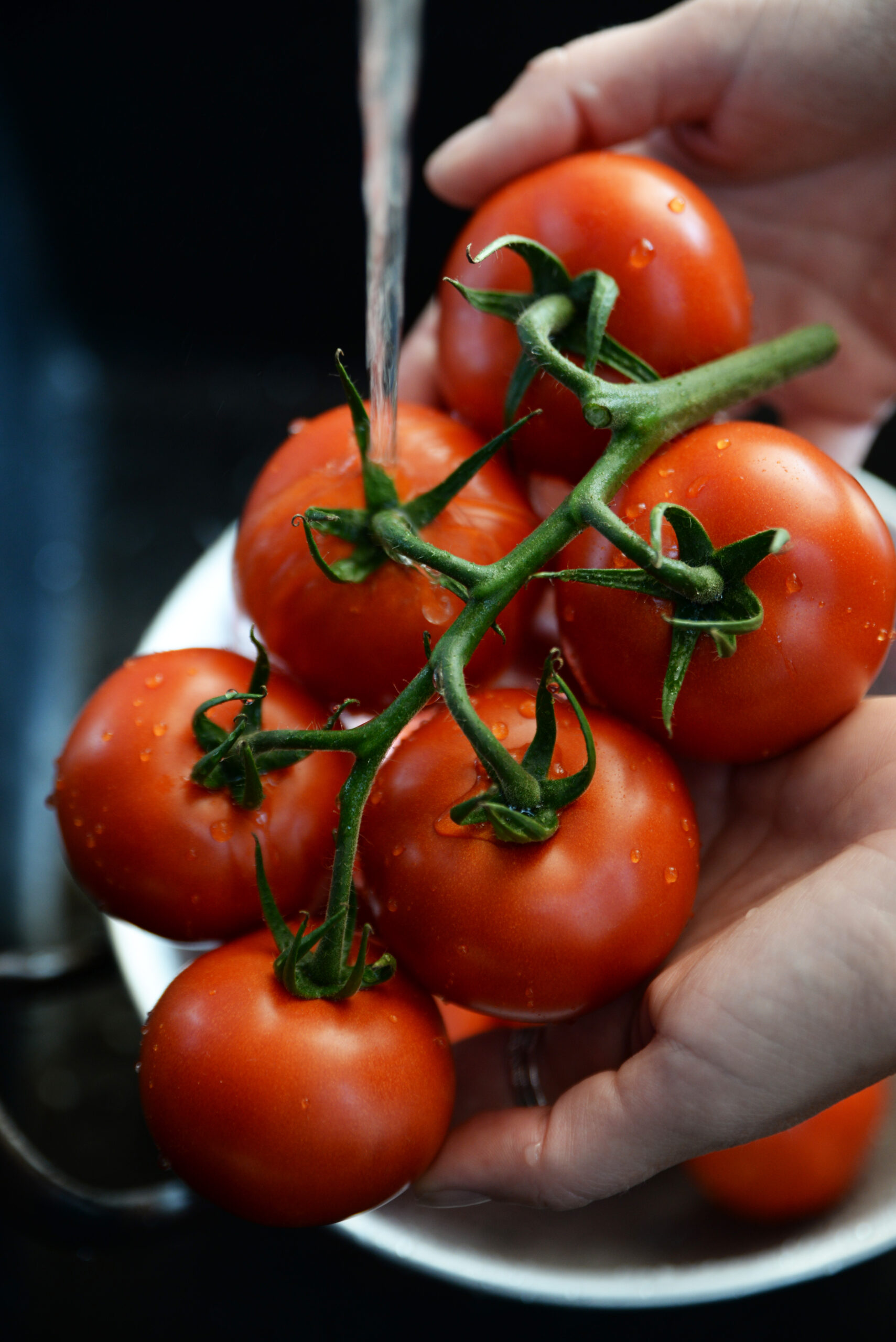
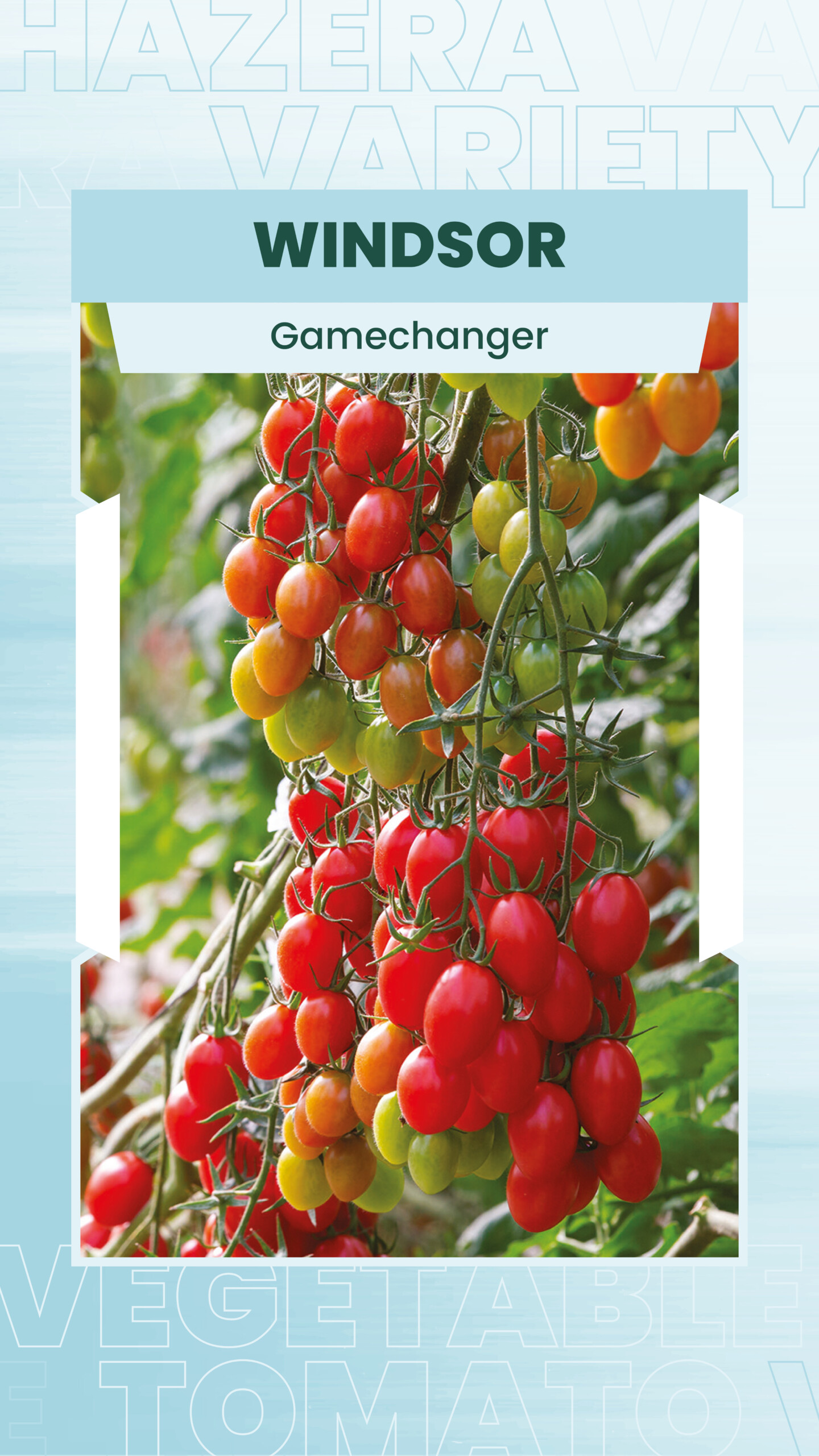
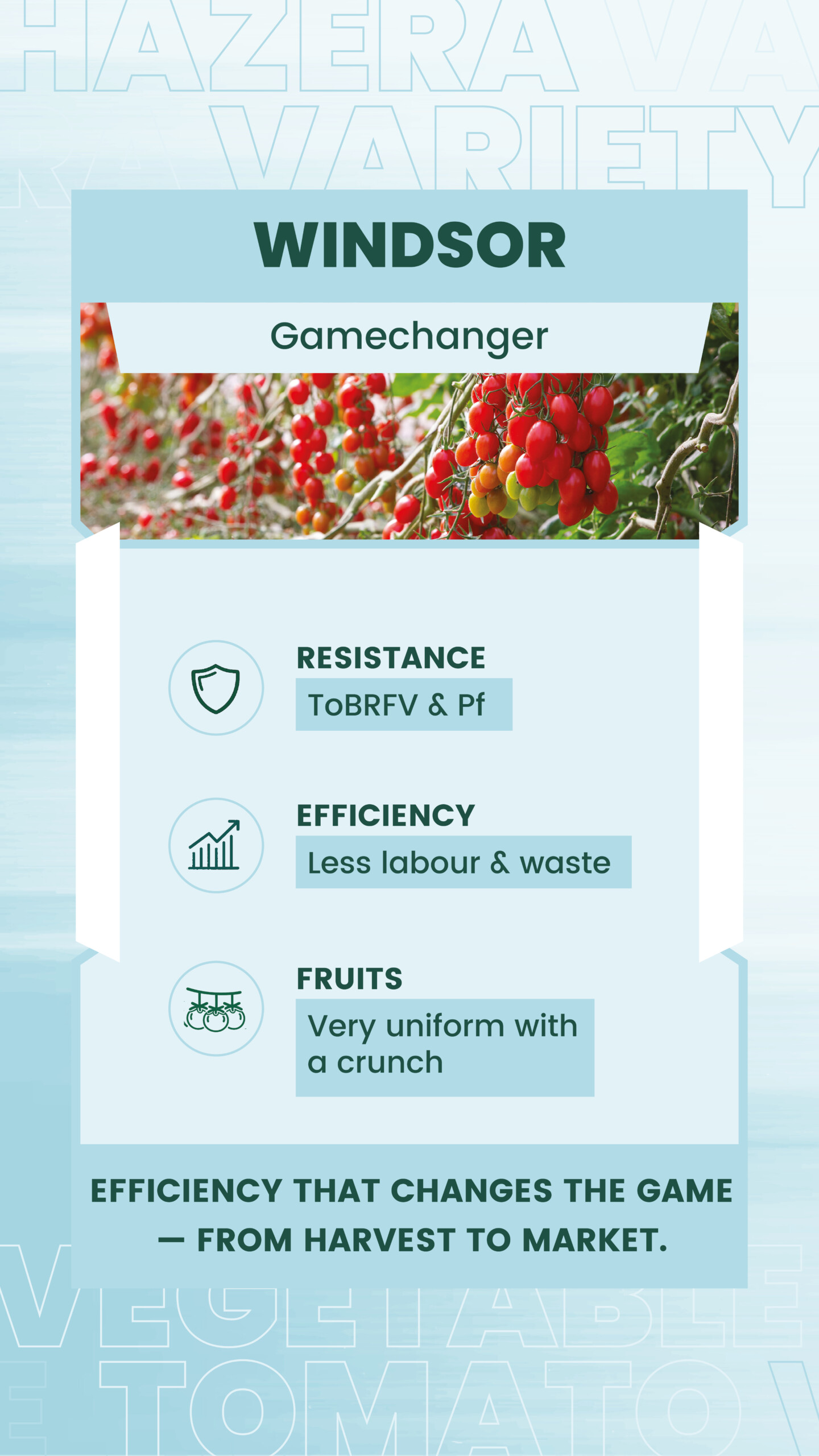
WINDSOR is a mini plum tomato bred to change the rules of modern tomato production. Combining labour-saving characteristics, reduced food waste, and resistance to ToBRFV and Pf, WINDSOR addresses some of the most pressing challenges growers face today.
With its uniform fruit size, WINDSOR is easy to manage throughout cultivation, harvest, and packing. This results in fewer handling steps, reduced labour input and a more efficient production flow. It also maintains outstanding crunchiness well after harvest.
WINDSOR’s strong fruit quality supports a reduction in food waste across the supply chain. Consistent mini plum fruits and reliable resistance help maintain quality from the greenhouse to the market, minimising losses and improving overall sustainability.
With its combination of efficiency, resistance and waste reduction, WINDSOR stands out as a true Gamechanger in the mini plum segment.
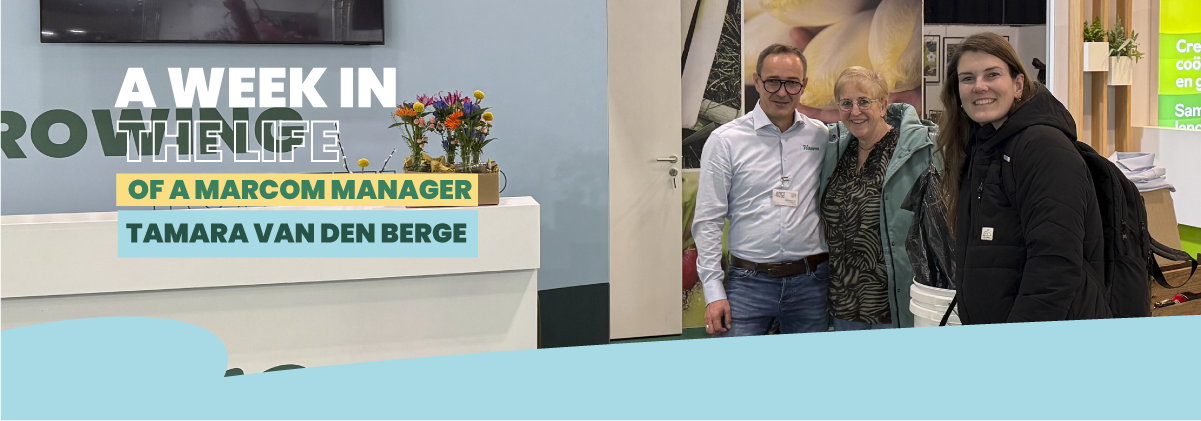
A Week in the Life of a Marcom Manager – Tamara van den Berge
Posted on Feb 11, 2026
As a Marcom Manager at Hazera, I oversee marketing and communication activities across the Benelux region. From content and campaigns to PR and event organization, every week brings new challenges and opportunities. This particular week revolves around one of the larger events in our calendar: the Agro Expo in Roeselare, West Flanders (Belgium). Here’s a behind‑the‑scenes look at my workweek.
Monday – Setting the stage
We’re pleasantly ahead of schedule with our Agro Expo preparations. Normally, we’d finalize the last details with the sales team today, but since they’re in Poland for a training, we already did that last week and our meeting is cancelled today. The extra breathing room allows me to refine the packing list and review logistics.
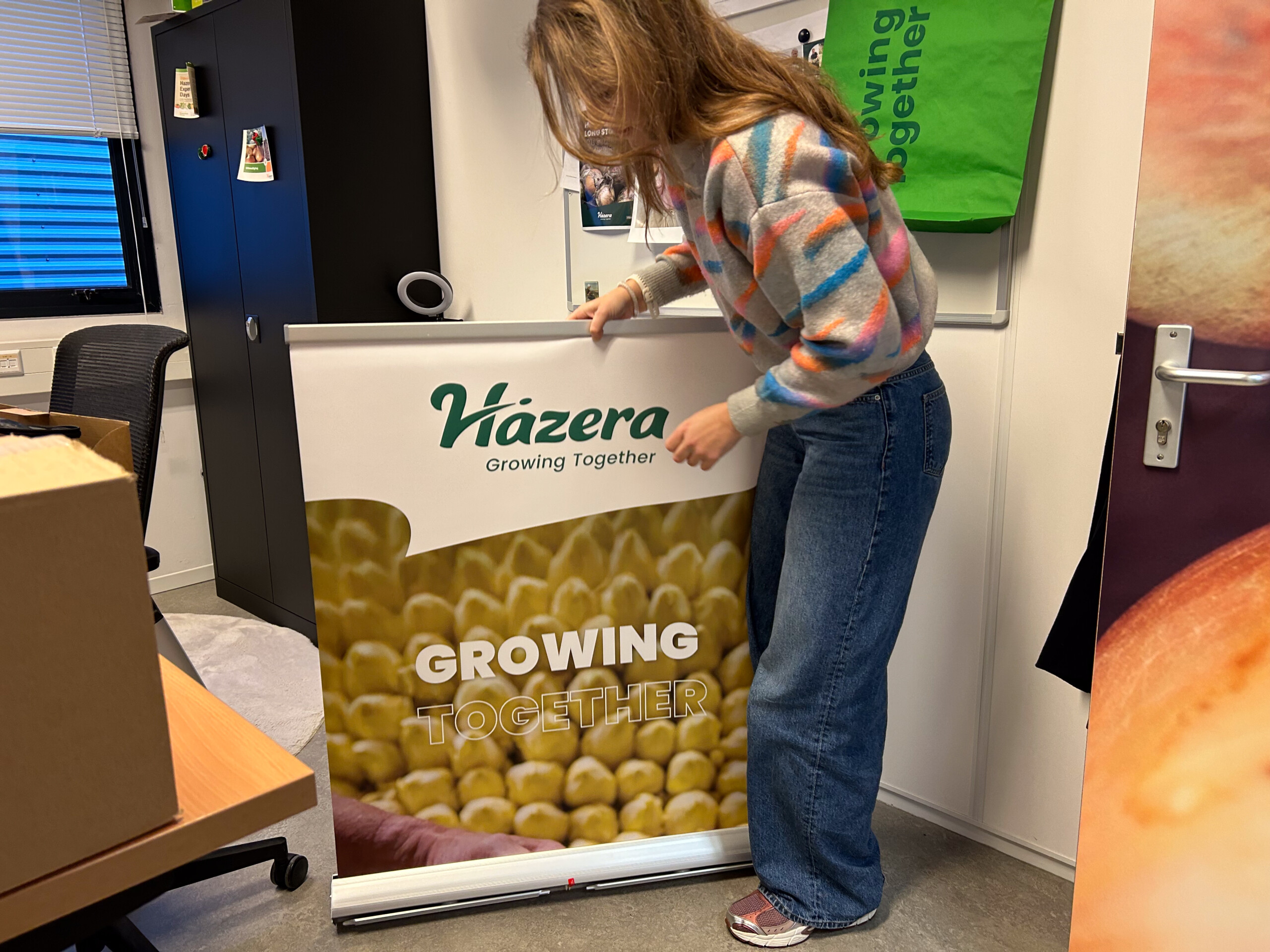
Meanwhile, another event is approaching: the Cauliflower–Broccoli Contact Day in Mijnsheerenland (the Netherlands). For both events—and for one in February—I ordered new roll‑up banners to complete our assortment for a number of crops. I unpack them, check the prints, and everything looks spot on.
And there’s more to review: we also received our newly printed, more eco‑friendly leaflets. The team and I are very happy with the quality.
The rest of the day involves updates to the Dutch website, exploring new AI tools, and briefing our advertising agency together with a colleague for another important event later this year: the International Open Days in September.
Tuesday – Content, coordination & creativity
The stand builder starts setting up the booth today. Since the location is more than two hours away, I’m not on-site to supervise, but with our longstanding partnership, I know the job is in good hands.
My own schedule is filled with other communications work. I finalize an article with our customer, TOP The Onion Group, and send it for approval. I update the website and the social media calendar, and we hold our weekly marcom meeting to review all ongoing activities.
Towards the end of the day, I prepare the items I’ll need to take to Roeselare later in the week. It’s quite a lot, despite having already sent several items with colleagues, so I ask a retired colleague whether I may drop off additional materials on Thursday. She happily supports us at events—and we’re very grateful for her help.
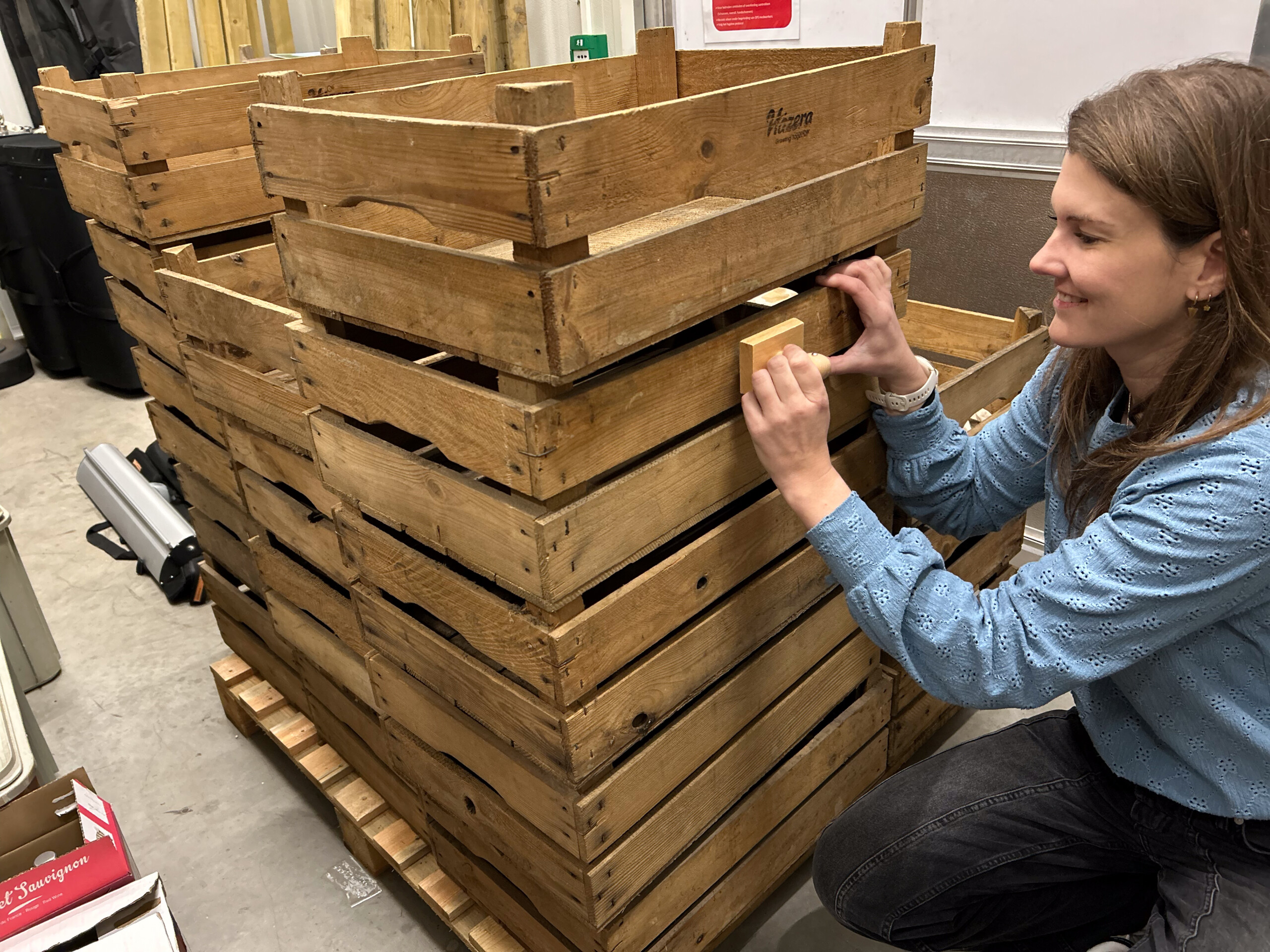
I end the day on a creative note: stamping our vegetable display crates with the Hazera logo.
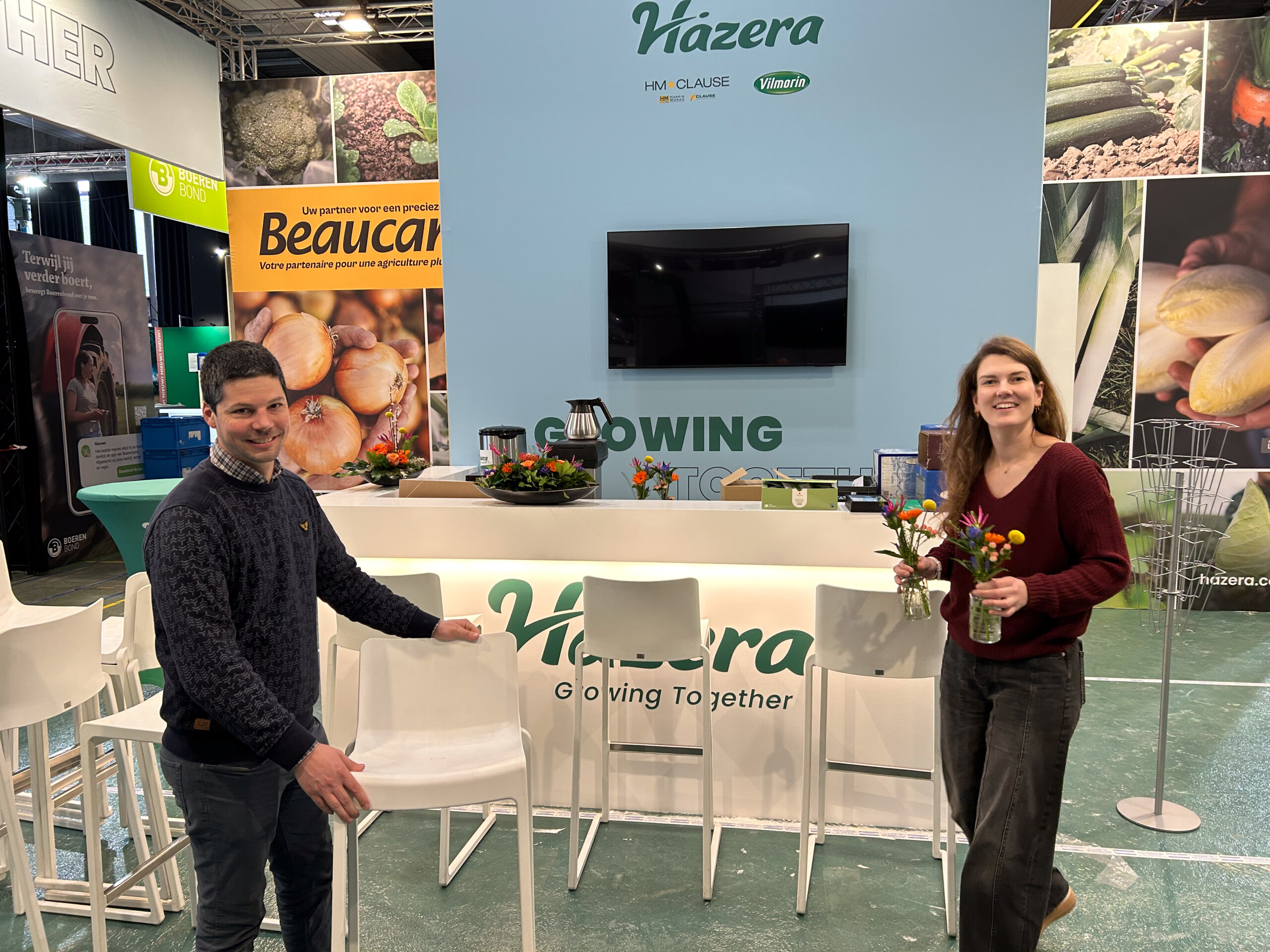
And even better news: the stand builder sends photos. The booth is already fully built!
Thursday – Final preparations in full swing
After a day off on Wednesday, today is all about wrapping up the final details.
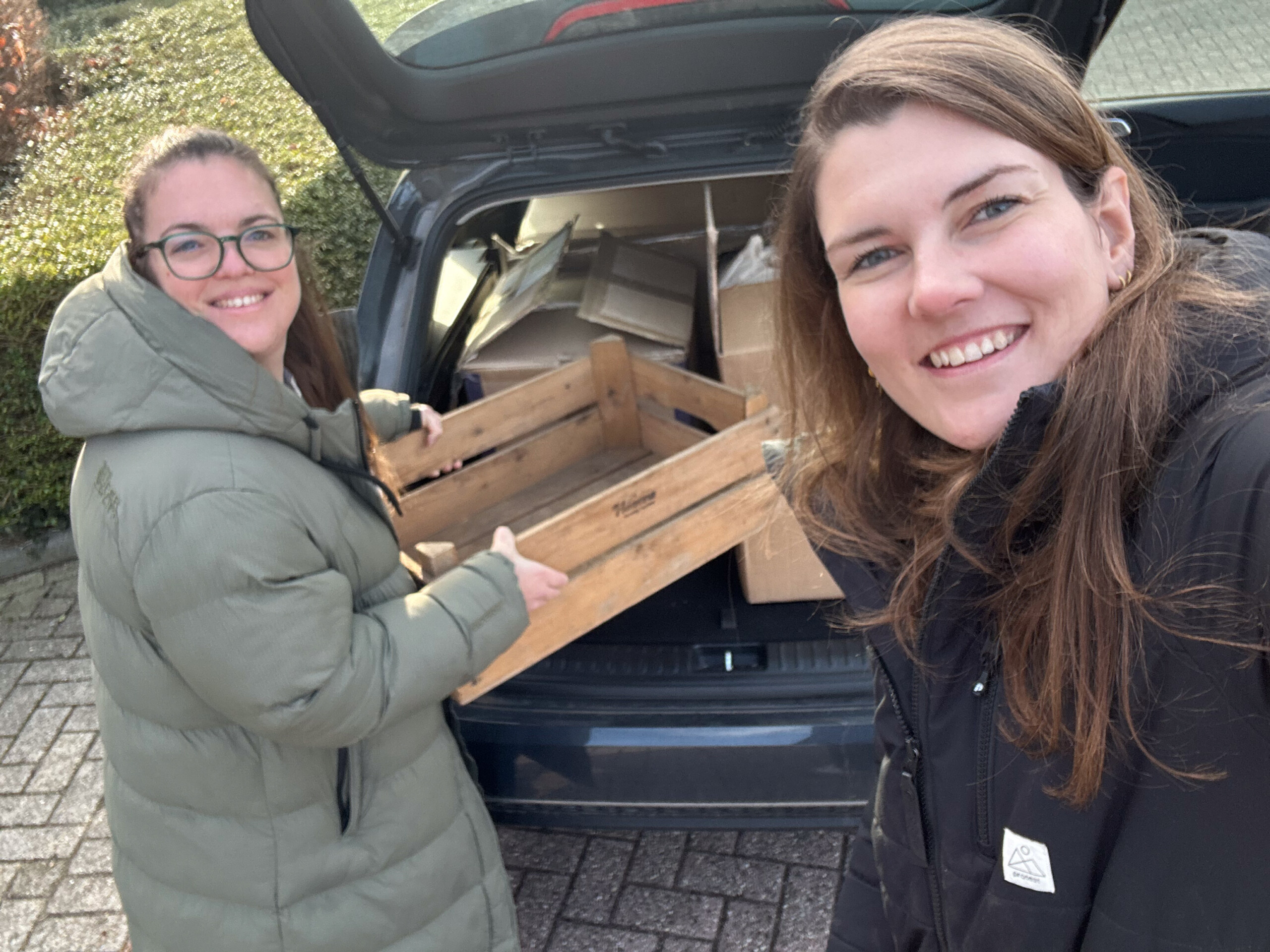
In the morning, I pick up the rental coffee machine and, together with a colleague, load several boxes of goodie bags. I deliver them to my retired colleague and once my car is empty again, it’s time to load the rest of the equipment. It takes some puzzling, but everything fits perfectly. And there’s even space left for my suitcase.
Before finishing the day, I run through the packing list once more, check the event script, and note the last action items for Friday. I also prepare the necessary materials for colleagues attending the Cauliflower–Broccoli Contact Day so they’re fully set for their event as well.
Friday – On the road
In the morning, I collect fresh flower arrangements and clear out my inbox. With the out‑of‑office message switched on, I head to Roeselare, where I meet my colleague.
When we arrive, the high tables and chairs are already in place, so we start setting up the booth right away. It turns out that our table skirts don’t fit perfectly. Fortunately, with some creative thinking—and the tyraps we brought along—my colleague finds a neat solution.
The water connection isn’t yet operational, so some checks have to wait. After the drink delivery arrives, we store everything securely and lock the stand. My colleague heads home, and I drive to the hotel where I’ll stay until Monday.
Saturday – Opening day
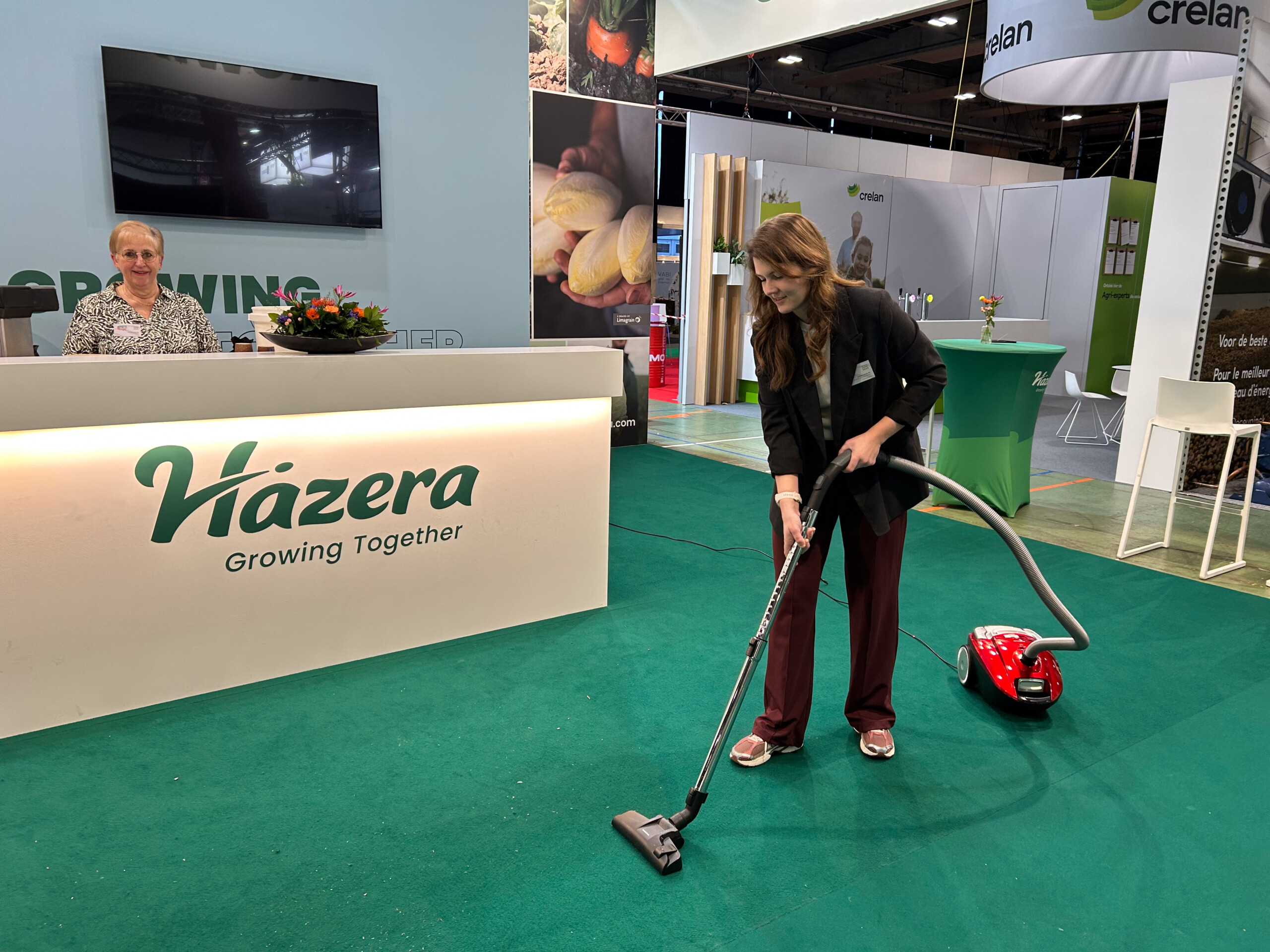
It’s the first official day of the event, something we’ve been preparing for months. We arrive early to vacuum, clean, and set everything up. The water issue is resolved just in time.
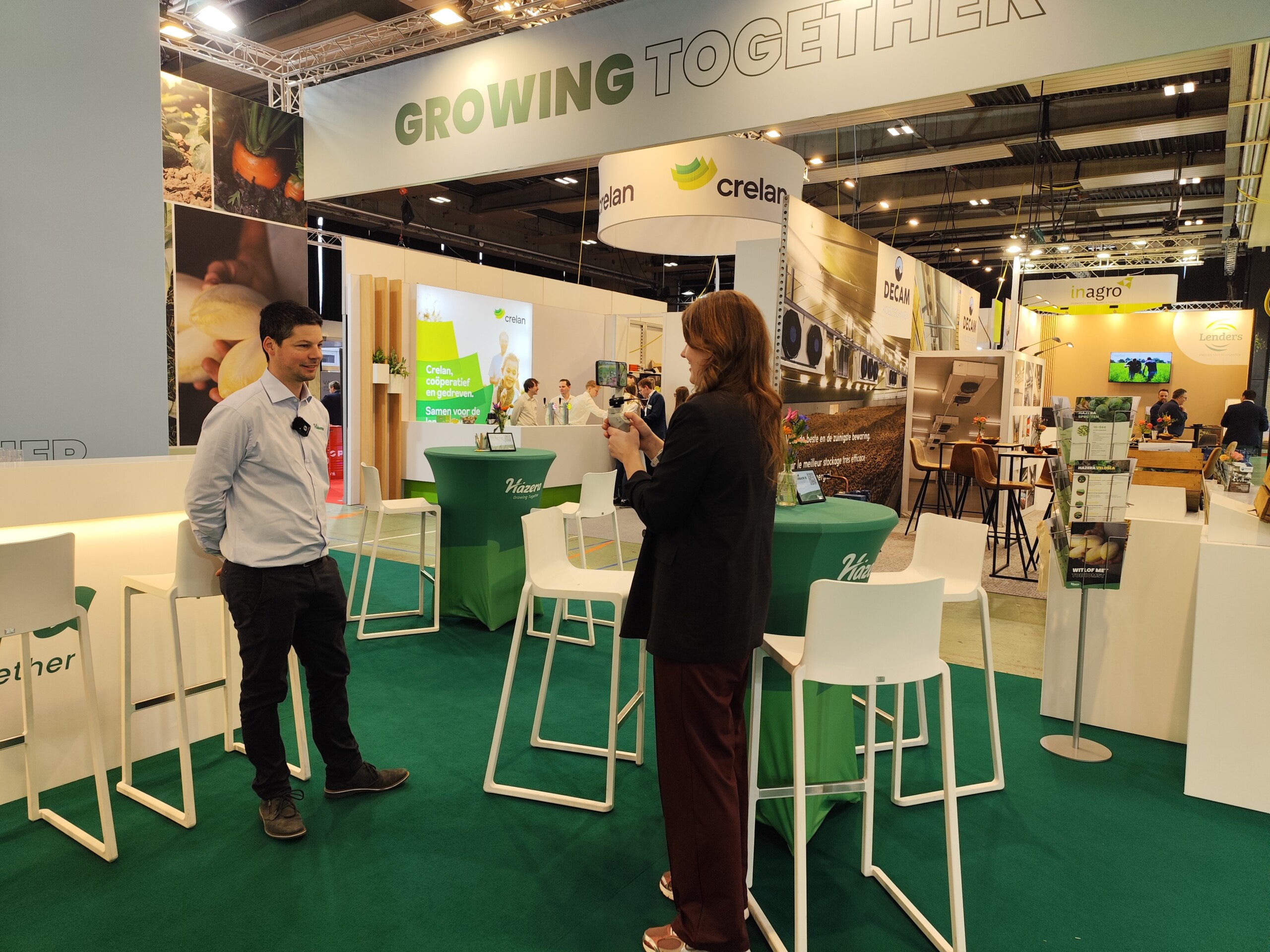
My responsibilities throughout the day include creating content, helping colleagues during busy moments behind the bar, and welcoming visitors. Together, we keep close track of stock levels and arrange extra orders when needed.
Unfortunately, we need to send a colleague home due to illness. These things happen, and we reorganize internally while keeping her updated.
Our Commercial Manager BNL visits the event today, and together we tour the exhibition hall to gather inspiration and see how others present their stands. I jot down several ideas and improvements for future editions.
Later in the afternoon, the Flemish Minister of Agriculture, Jo Brouns, also visits our stand, something that both visitors and our team highly appreciate.
Sunday – A Busy and lively day
The second day is traditionally the busiest, and that certainly proves true. Before the doors officially open, we already welcome visitors who attended a breakfast session at the event. Thankfully, we were well prepared.
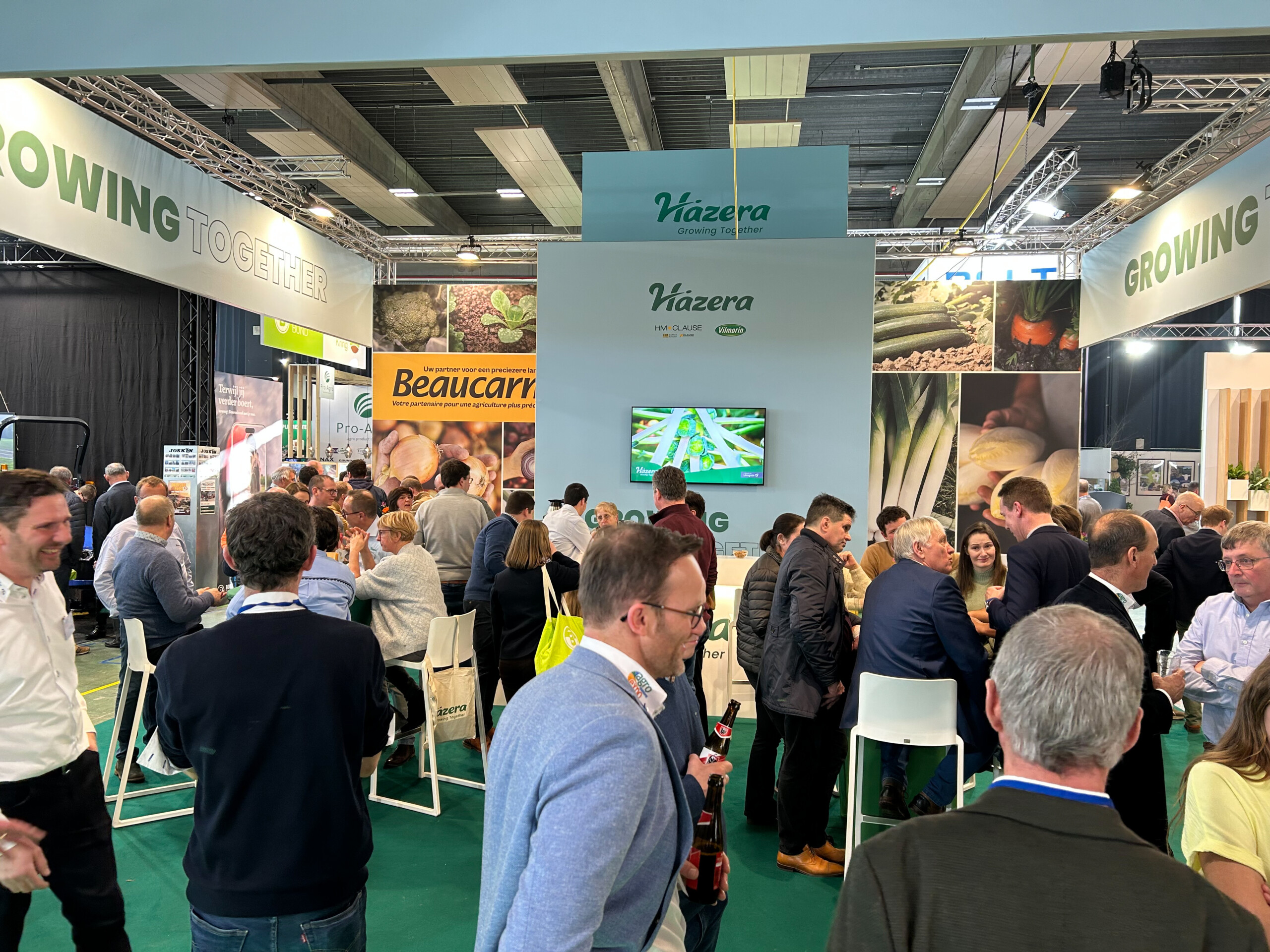
The booth is lively and crowded throughout the day. I take plenty of photos and videos and ensure everything behind the scenes runs smoothly. Despite one missing team member, we manage the day seamlessly.
Monday – Final day & teardown
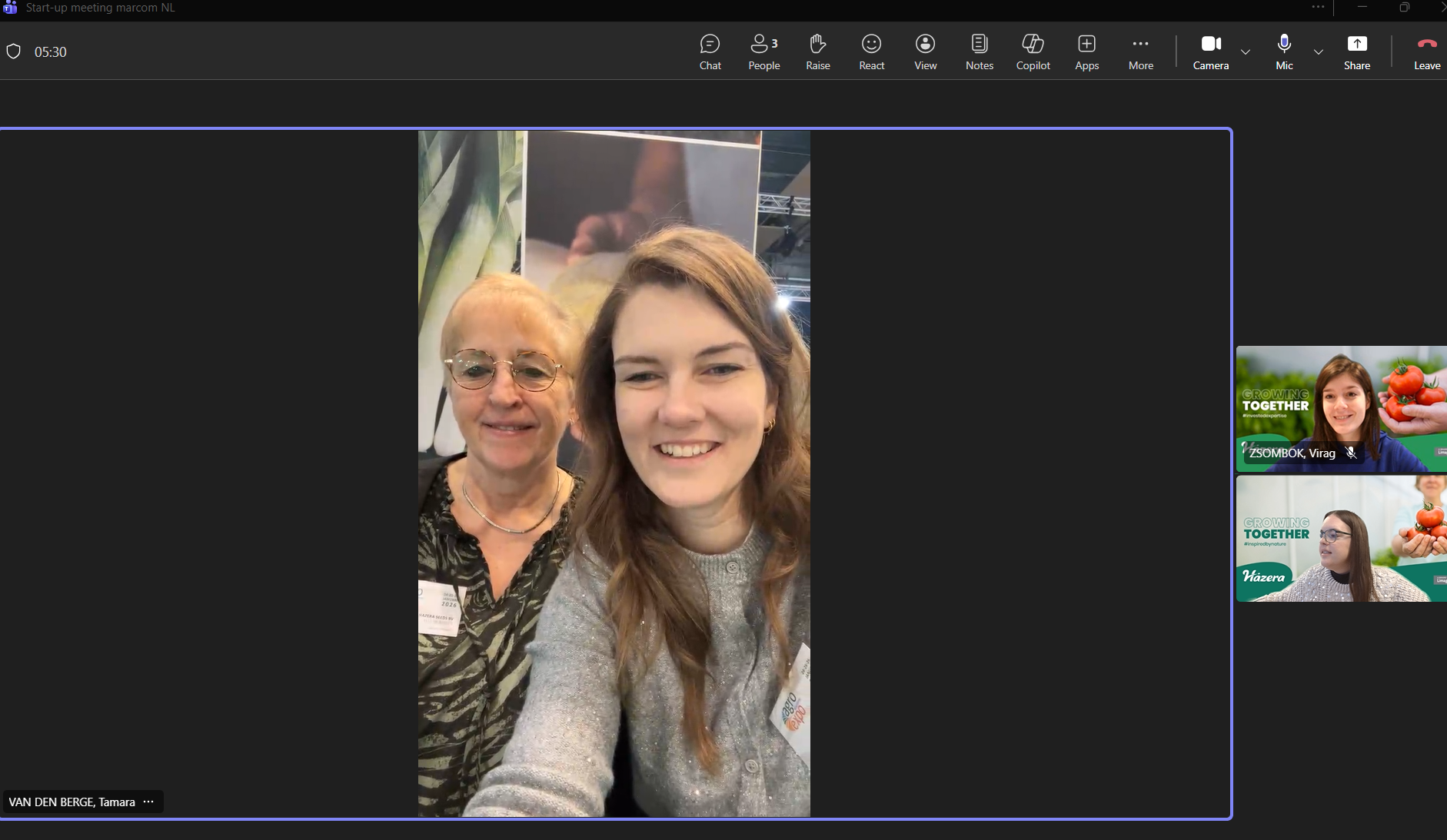
We expect another strong turnout for the final day. We arrive early once again, and before the event opens, I take a quick walk around the exhibition hall for some last inspiration. Colleagues at the office are eager to hear how things are going, so I keep them updated through Teams.
Around midday, I begin working on the after movie and start drafting this article. I remain available for the team, but everything is running smoothly.
After closing time at 19:00, we begin dismantling. We return unused drinks to the catering service and load the cars.
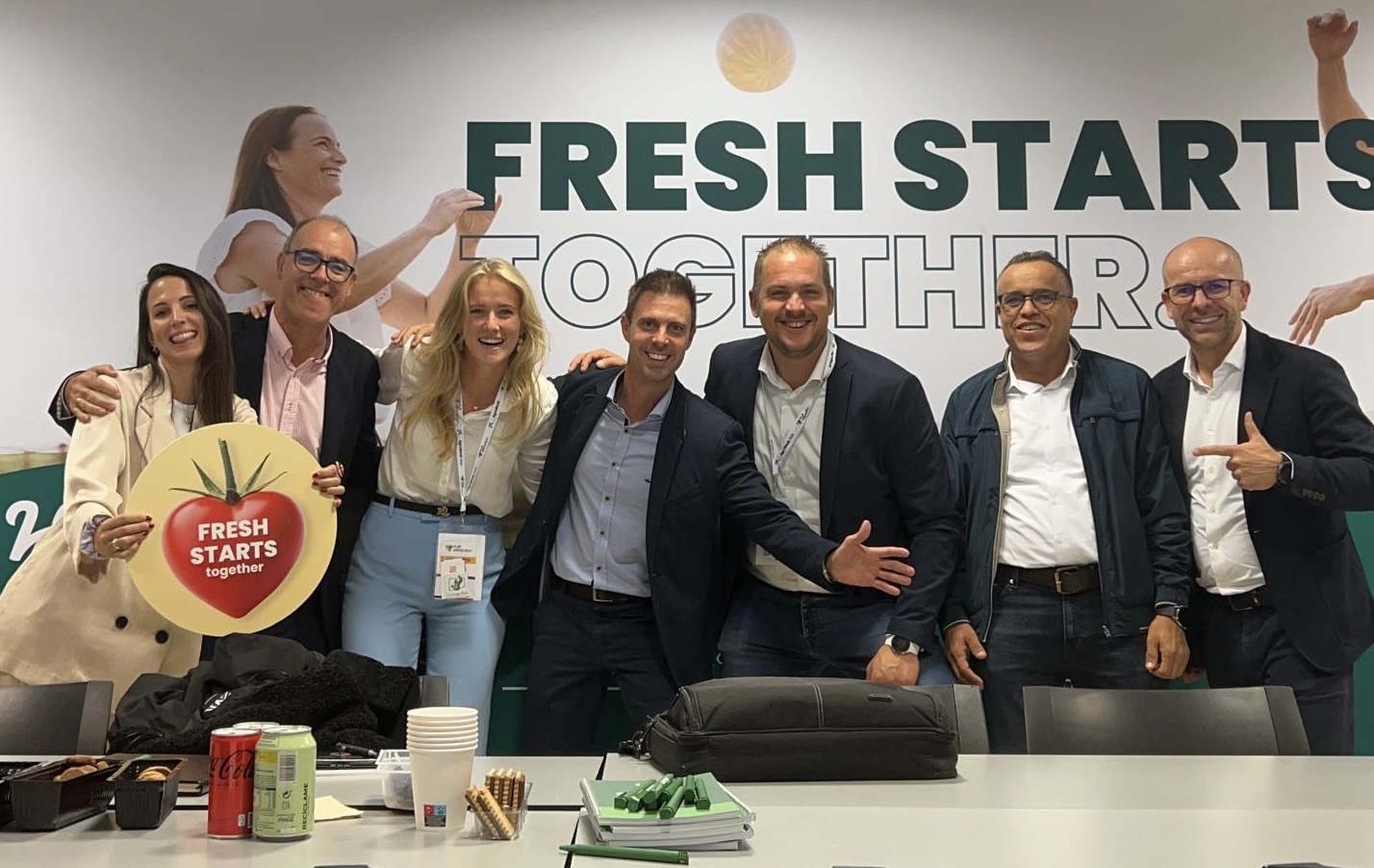
Before we drive home, we reflect on a successful and inspiring event. It was my first time attending the Agro Expo, and I learned a great deal—both in the run-up and during the event itself.
Next week, we’ll schedule a team evaluation. But for now: time to head home!
A Week in the Life of a QA Specialist – Masha Nadav
Posted on Feb 10, 2026
NAL External Audit at Hazera
The annual NAL external audit is one of the most important milestones in our QA calendar. It’s an intense, detail-oriented week that requires accuracy, teamwork, and readiness across every department.
NAL stands for Naktuinbouw Authorized Laboratory. Its accreditation ensures that seed testing laboratories operate with high reliability and quality standards.
The goal is to guarantee that seeds meet strict quality requirements before commercialization, providing confidence to customers and regulatory bodies. This accreditation reflects compliance with Naktuinbouw conditions and international protocols for seed quality testing.
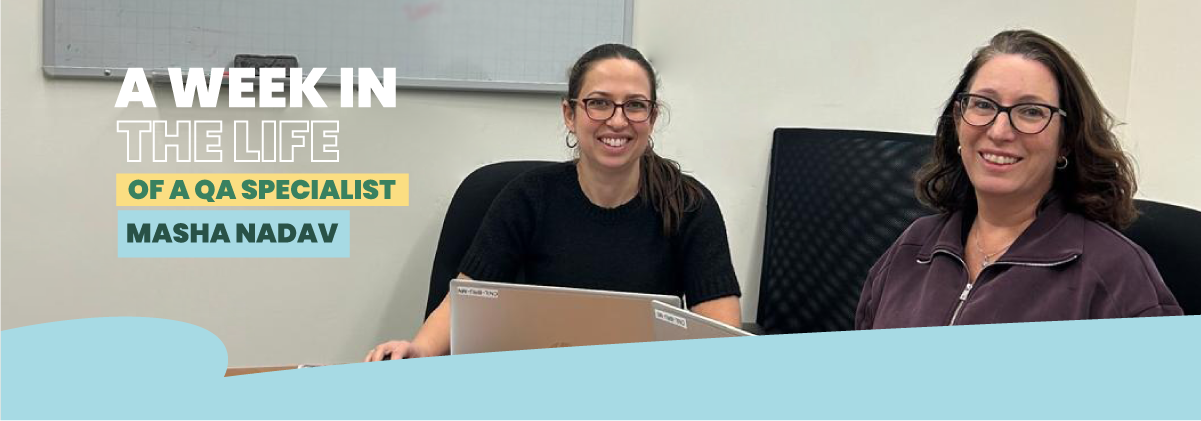
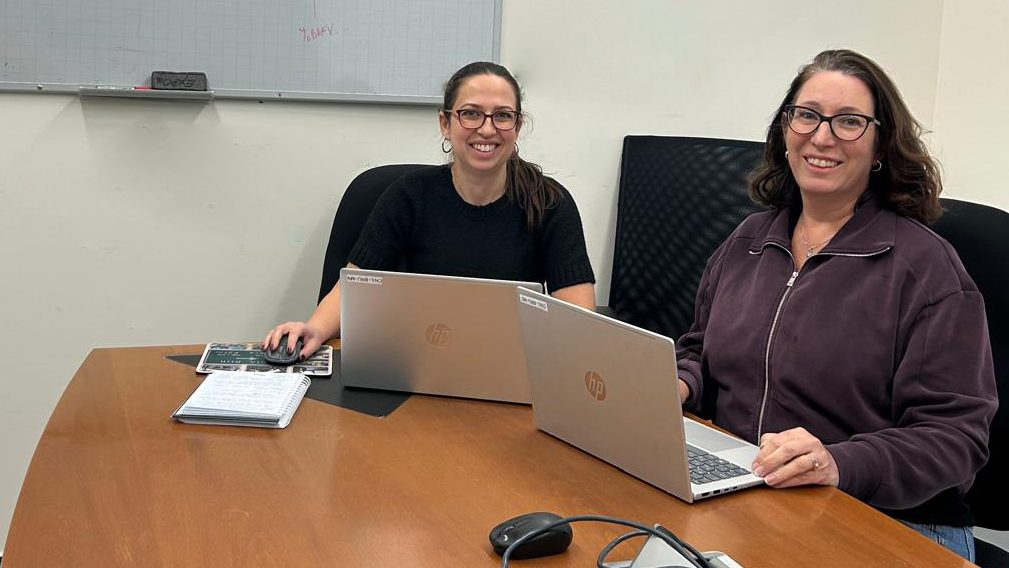
I approach this week together with Michal Efrat – Quality Assurance Manager IL, whose experience and guidance are essential in ensuring everything runs smoothly. This is how our audit week unfolded.
Sunday – First preparations & system alignment
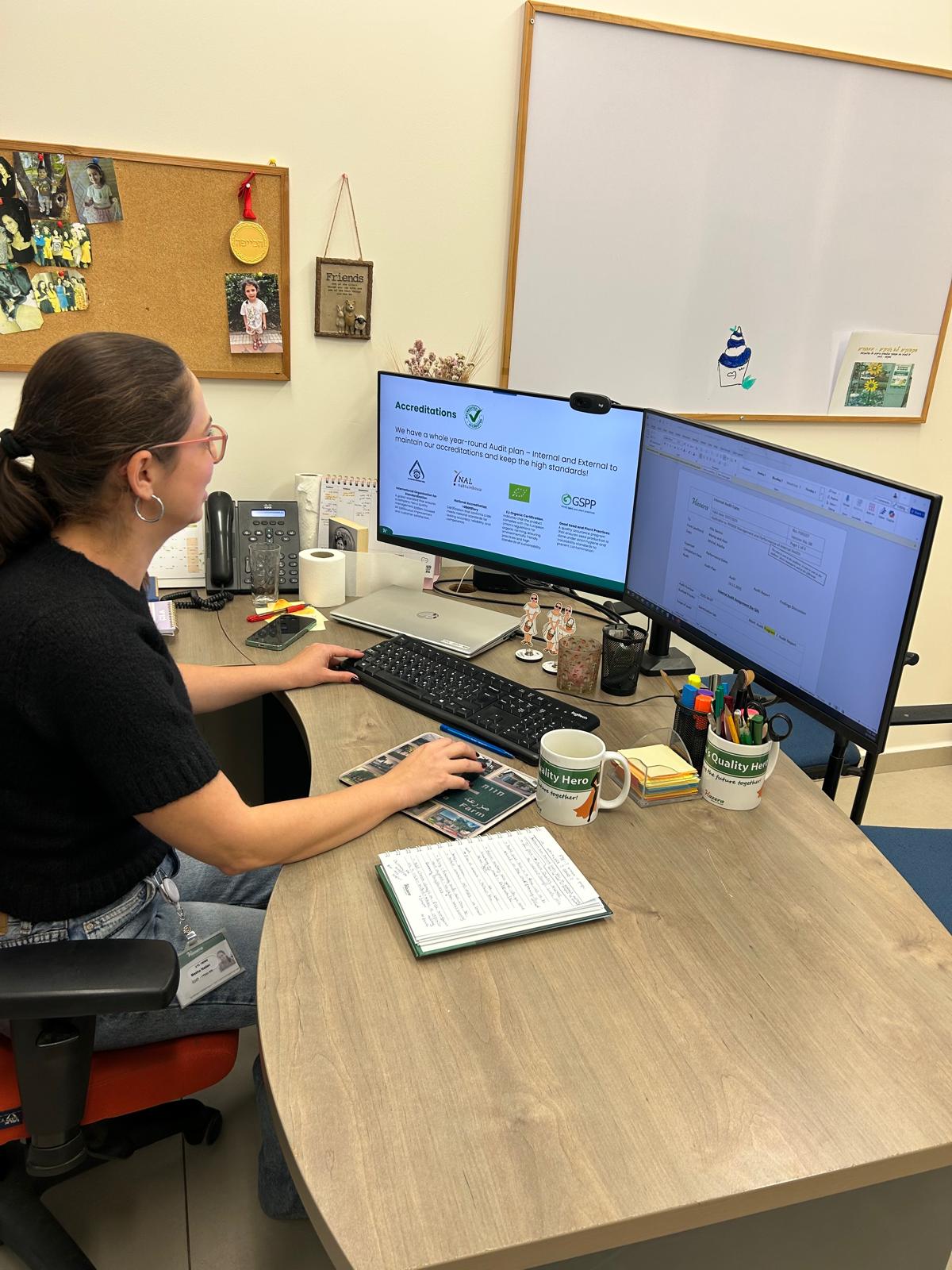
As the workweek begins on Sunday, the NAL audit preparations are already underway. Together with Michal, I review the full audit plan and prioritize what needs attention before the auditors connect.
Our focus areas include:
Ensuring all documentation is updated and easily accessible
Reviewing corrective actions from previous audits – both internal and external
Validating training files and operator competencies
Confirming traceability across the labs and the processing plant
Having conducted remote audits consistently over the past three years, we are well-versed in NAL’s expectations and highly experienced with both the process flows and the technical challenges associated with remote audits. All our remote audit equipment – a clearly time-lined agenda in Teams, phone camera, Jabra speaker, and backup devices – is prepared in advance so we can concentrate fully on content rather than logistics.
Sunday ends with a solid overview and clear direction for the next day.
Monday – Documentation completion
Monday is dedicated to advancing one of our most important long-term improvements: the transition to our new documentation system, WIN. We focus on organizing existing materials, mapping, and ensuring the new structure fully supports daily operations.
The WIN system brings significant advantages to QA and all operational units:
Centralized and controlled — documents are stored in one place, easy to find, and always up to date.
Automated workflows — approvals and updates run smoothly, supporting compliance with ISO, NAL, and corporate standards.
Multi-language support — improving accessibility for all teams.
Smart navigation — links between related documents and role-based access ensure users quickly find only what’s relevant to their function.
This marks a meaningful shift toward more efficient, transparent, and aligned documentation management.
In addition, we schedule a focused session with key departments to address Non-Conformities (NC), support their analysis, and ensure follow-up on corrective actions that drive real change. This collaboration strengthens ownership and improves solution effectiveness.
By the end of Monday, we’ve made strong progress: the documentation system is well-structured, and teams are aligned on actions, setting a solid foundation for the upcoming audit and future improvements.
Tuesday – Audit day 1: Health Lab
The first audit day starts with an unexpected twist: one of the professional auditors is sick and unable to join. Fortunately, a replacement is arranged quickly, and we begin the session without delays.
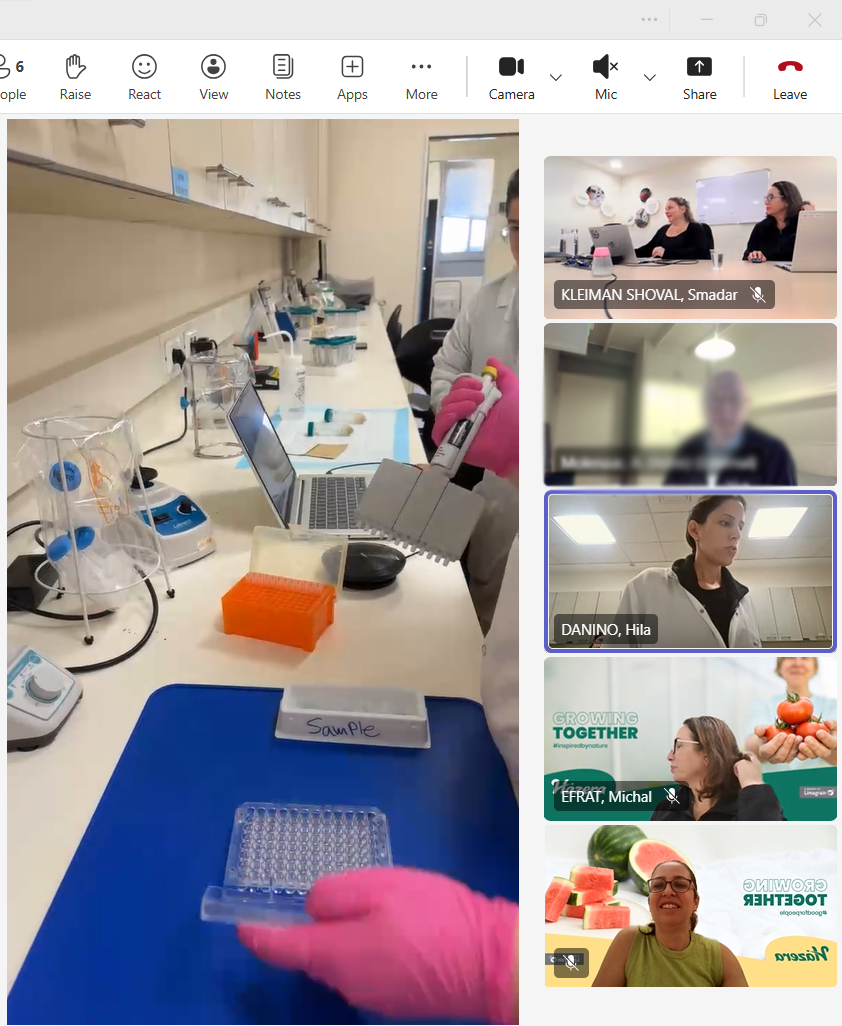
Using all the tools, the auditors are guided through the Health Lab.
Focus points include:
Sample reception & labeling
Equipment qualification
Method demonstration
Training files for each Health Lab technician
Documentation and data integrity
We also make sure to show as many Health Lab methods as possible within the time frame, giving the auditors a complete and realistic view of our routine QC work.
The day ends with positive feedback – a good start.
Wednesday – Audit day 2: Germination Lab
The second day focuses on the Germination Lab.
We demonstrate:
Accredited germination methods
Environmental monitoring
Scoring and record keeping
Sample identification
Training and qualification of germination technicians
We walk the auditors through multiple workflows, ensuring they get a full picture of our capabilities.
Thursday – Audit day 3: Processing Plant
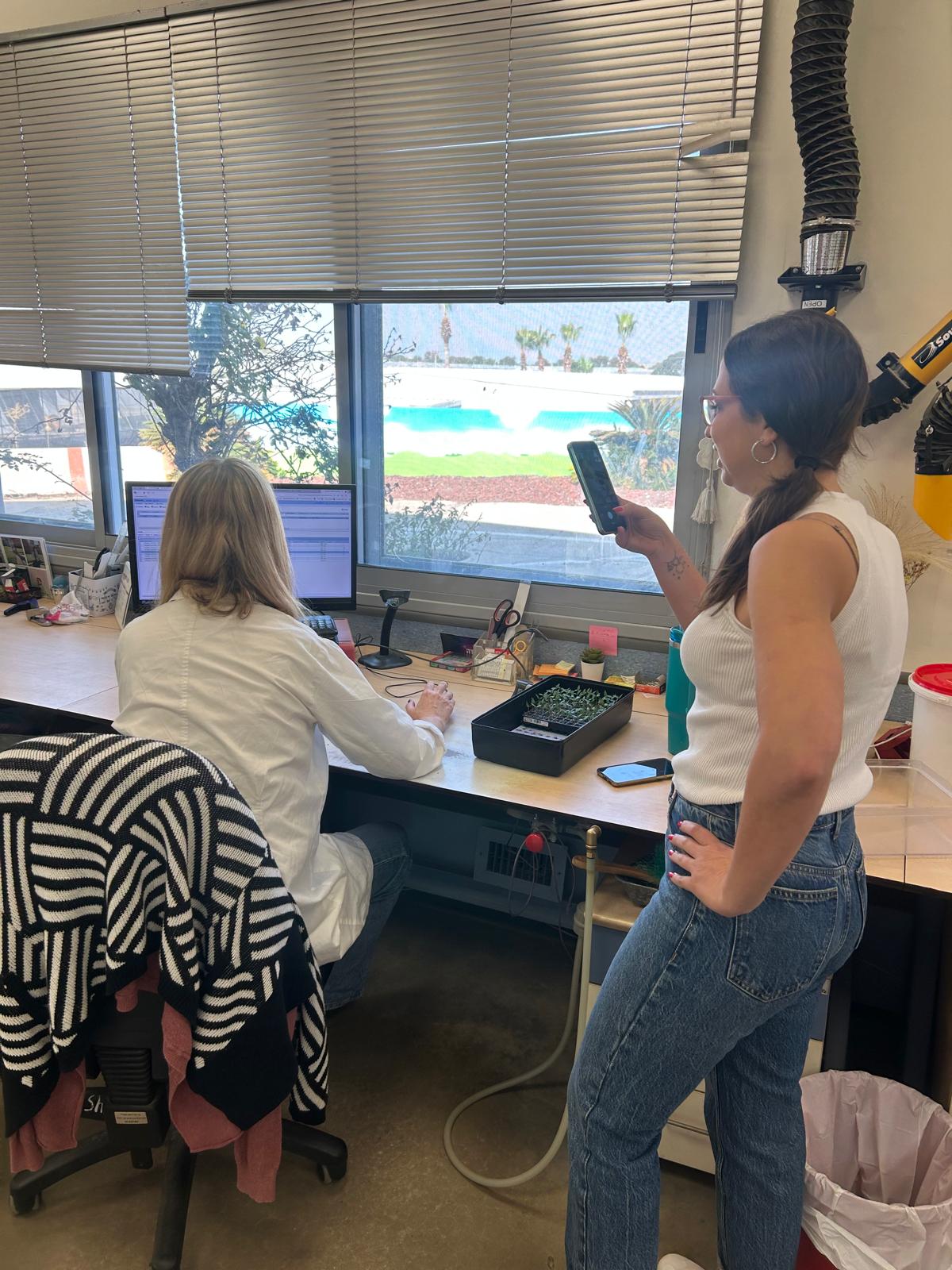
The final day of the audit focuses on the Processing Plant, with a more targeted and concise scope.
The auditors review two core methods:
TSW (1000 seed weight)
The sampling process
We demonstrate both methods clearly through the remote setup. The auditors also place strong emphasis on two essential QA elements:
Training and competency of plant employees, including qualification for each task
Equipment calibration and maintenance, ensuring accuracy and reliability over time
The team provides all required documents and explanations, and the session flows smoothly from start to finish. The auditors show strong engagement throughout, and the review concludes on a positive note, reinforcing the solid work and professionalism of the plant team.
Looking back
This NAL audit week was intense but deeply rewarding.
Working closely with all the operational teams from QC and the processing plant showed once again how much preparation, communication, and teamwork matter.
The effort was truly cross-functional, connecting QA with every part of the business to ensure compliance, efficiency, and customer trust.
Despite the limitations of remote auditing, we provided a complete, transparent, and confident demonstration of our work. We can proudly say: It was a successful audit and a valuable learning experience – The observations shared by the auditors will help us further improve our processes to ensure the highest quality of operations and products before delivering seeds to our customers.
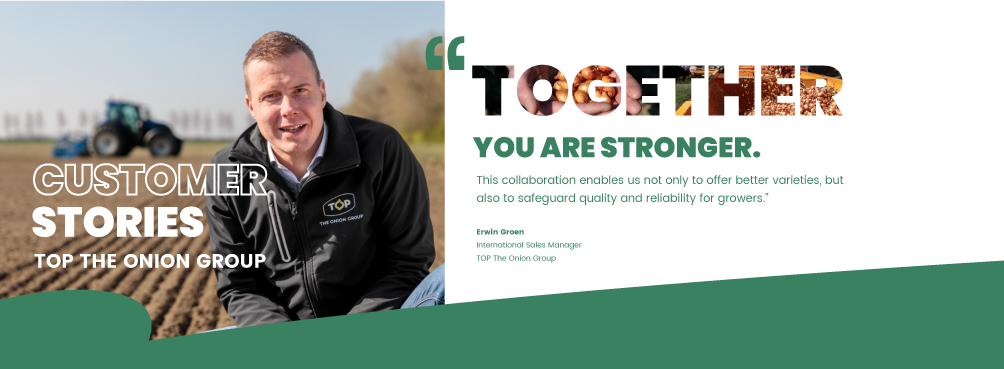
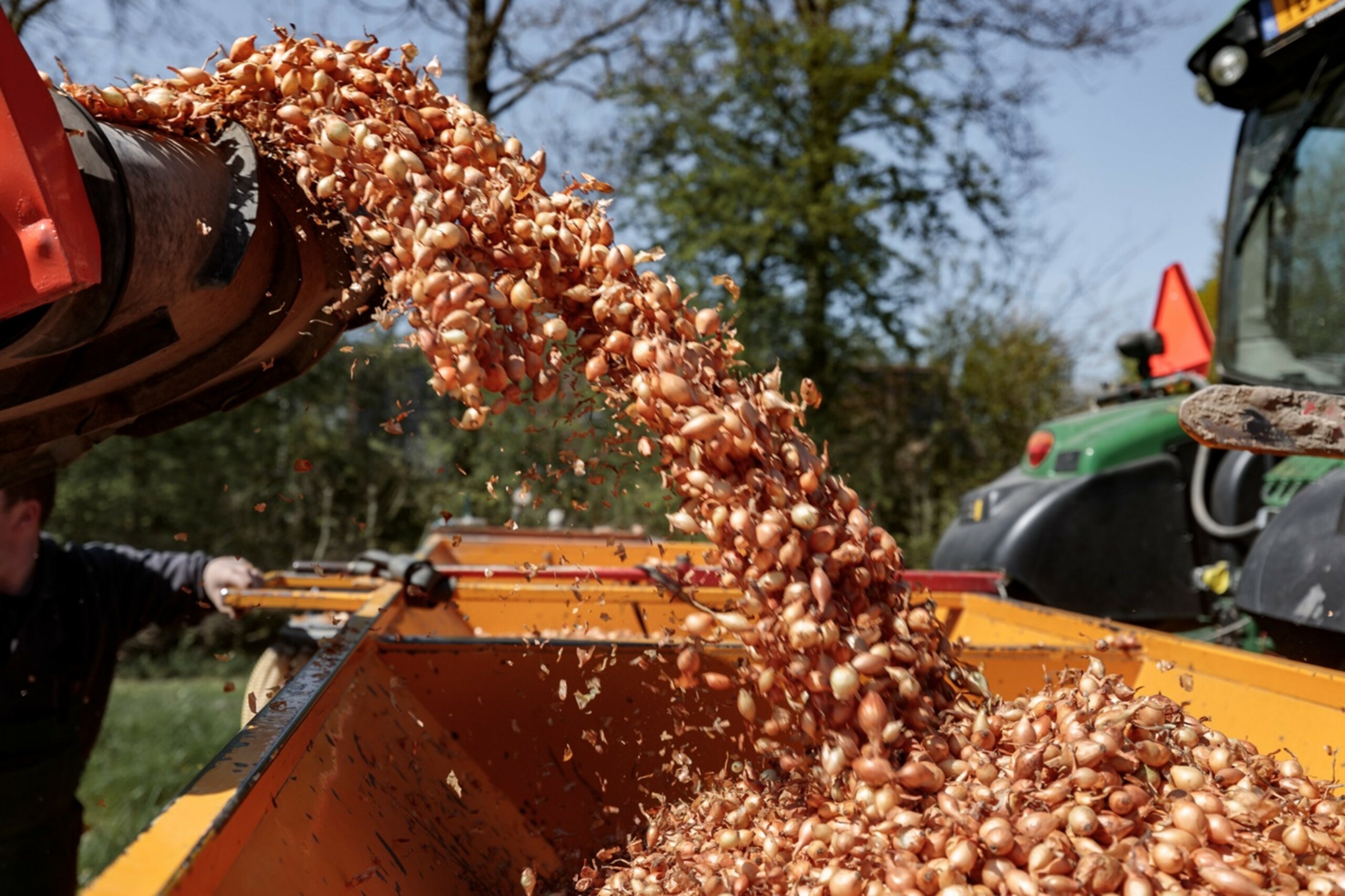
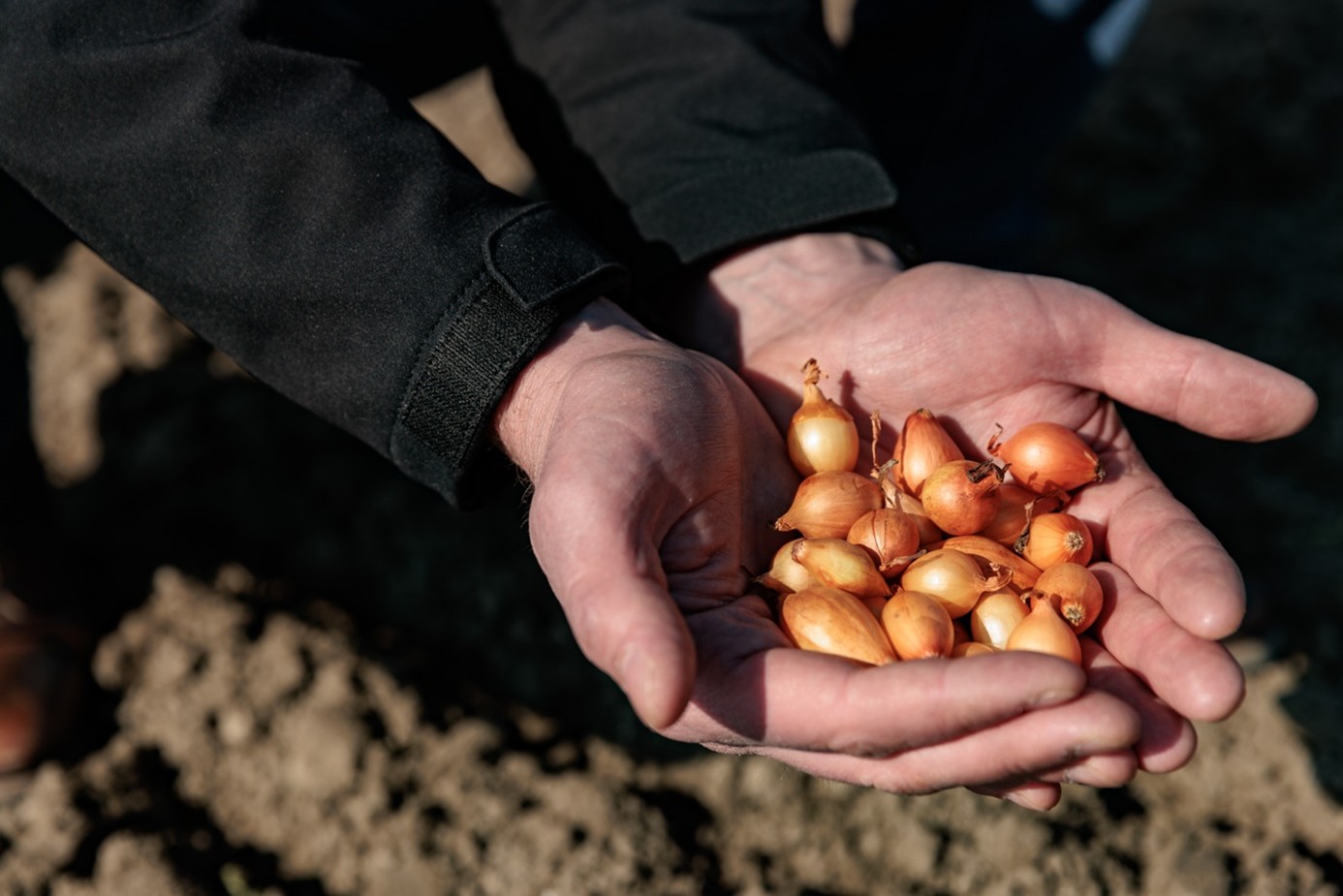
For more than thirty years, TOP The Onion Group has been a leading player in the production of first-year onion sets and the export of onions for consumption. What sets the company apart? A strong focus on quality and healthy starting material.
“We do everything we can to grow our onion sets as healthy as possible,” says International Sales Manager Erwin Groen. “That’s why TOP is the only company working on virgin land in northern France. This results in healthy products that growers can truly rely on.”
A shared ambition for quality and sustainable breeding
Over the years, the focus on quality at both Hazera and TOP The Onion Group evolved into a broader ambition. After years of working together in practice, it became clear that more could be achieved through closer collaboration. That shared conviction brought both parties together in an exclusive partnership.
“Hazera is one of the few companies truly involved in breeding varieties specifically for onion sets,” Erwin explains. Rather than adapting existing varieties, Hazera focuses on targeted breeding. According to Erwin, this is exactly where Hazera’s strength lies. “Many players try to tailor varieties to the market without a solid breeding program behind them. These varieties often originate from countries such as Australia or Japan. A variety that performs well there may struggle under Dutch conditions. We want varieties that are reliable, perform when it matters, and fit local growing conditions. That’s why it’s so important to develop varieties in the same environment where they are ultimately grown.”
The partnership therefore goes far beyond seed alone. “We are in close contact and share everything,” Erwin explains. “From market developments to feedback from growers. Together, we look years ahead and proactively address challenges such as disease resistance, drought tolerance, and fusarium.”
For Erwin, it’s clear: “Together, you are stronger. This collaboration enables us not only to offer better varieties, but also to safeguard quality and reliability for growers.”
Top performance within the onion set portfolio: Crusado and Akado
Within the current onion set portfolio, several varieties clearly stand out among TOP customers, including Crusado and Akado. “Crusado is, in our view, one of the best varieties in the early segment today. It is clear that breeding has focused on achieving the optimal combination of early harvest, high yield, good storability, and strong root development. Thanks to its powerful root system, Crusado is also better able to cope with drier conditions,” Erwin explains. “Crusado has meanwhile become a real favorite among many onion growers: the variety delivers high returns and, thanks to its excellent quality, is also very suitable for export to overseas destinations.”
Akado is a true standout in the red segment, mainly because this variety does not require heat treatment. “Akado is the only red variety currently available on the market for which this treatment is not necessary. Normally, red varieties are prepared through a treatment with high temperature and humidity to prevent the onions from forming seed stalks,” Erwin explains. “Although this preparation is effective in preventing bolting, it has the drawback of increasing the risk of bacterial rot. As a result, many growers have stopped producing second-year red onions. We believe these bacterial issues are largely linked to the preparation process. With Akado, we have found a clear solution. In addition, Akado is also a very early variety, which makes it even more attractive for growers.”
Varieties such as Crusado and Akado illustrate what TOP The Onion Group stands for: reliability, quality, and solutions that work in practice. Combined with the intensive collaboration with Hazera, this forms a solid foundation for continuing to develop onion sets in the future that are tailored to Northern European conditions and the needs of growers.
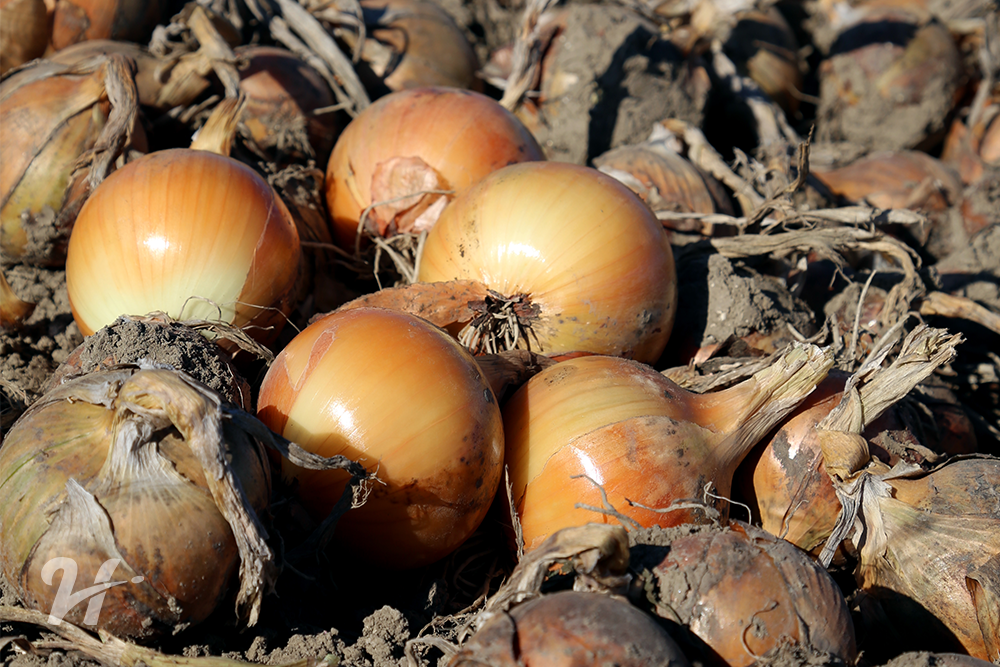
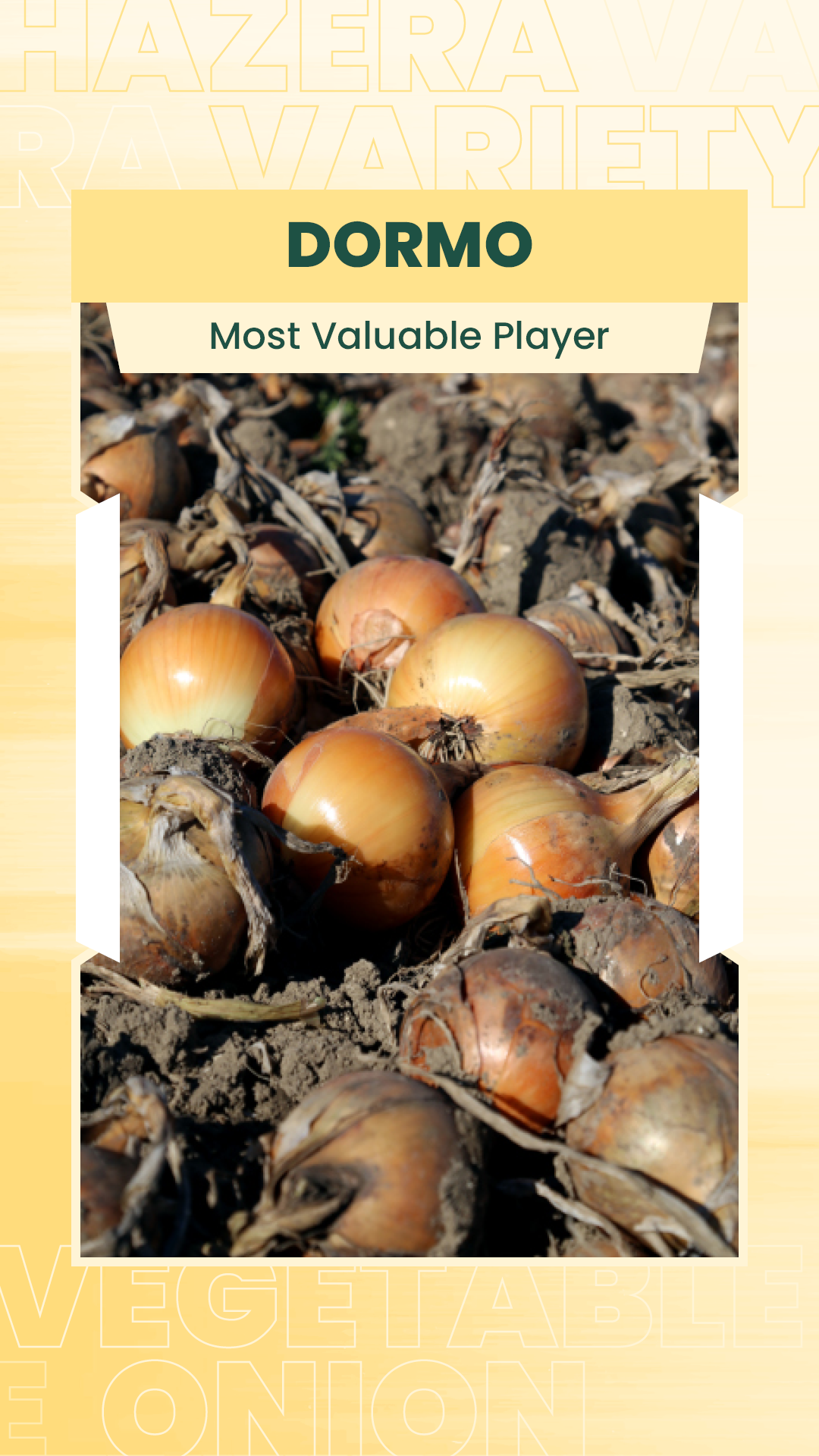
Introduced in 2006, DORMO has earned its place as a true Rijnsburger classic and one of Hazera’s top-performing onion varieties. Season after season, DORMO delivers where it counts, building a strong reputation in the Netherlands for storage and export.
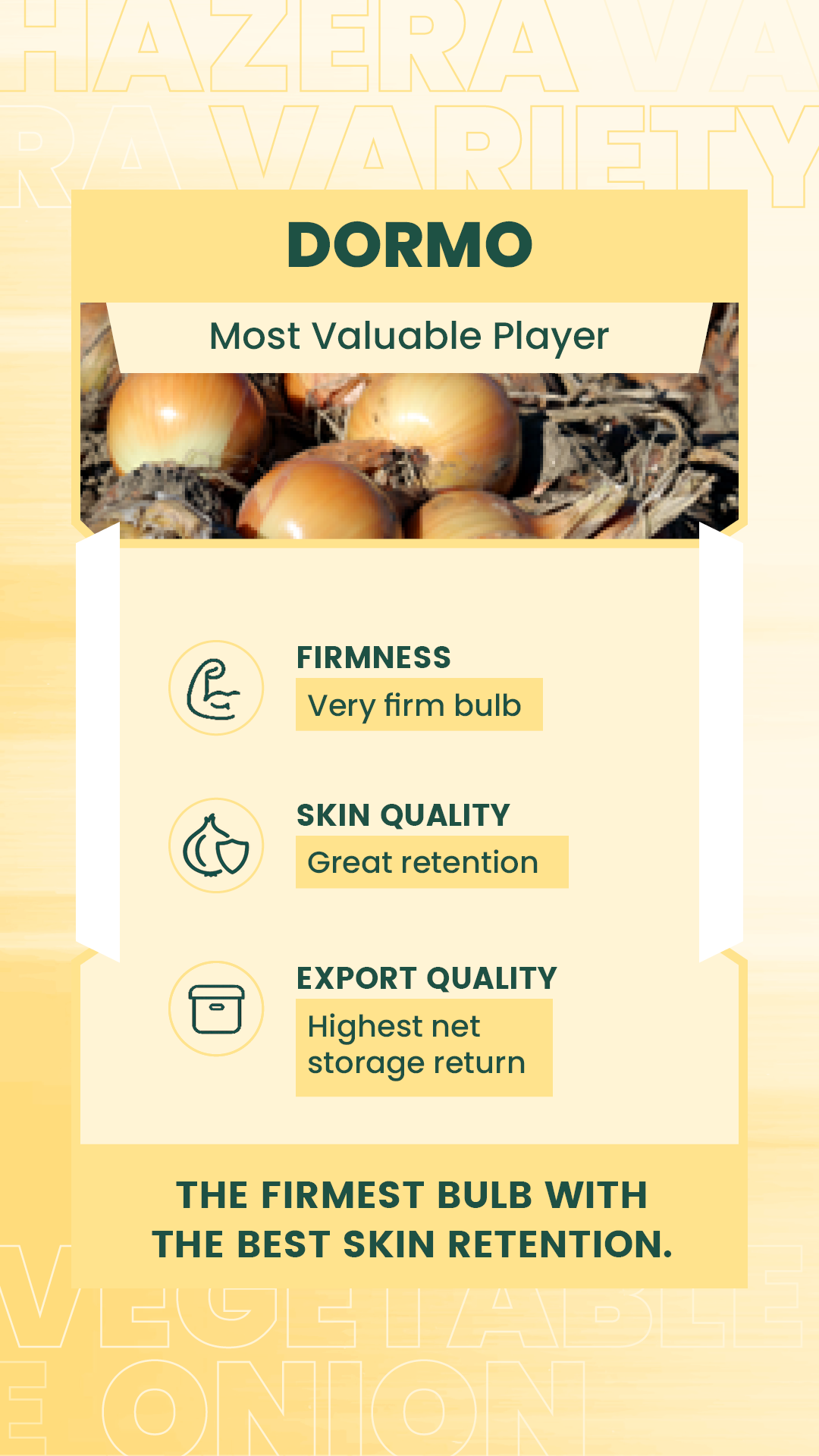
This variety stands out for its very firm bulbs and excellent skin retention — key qualities that keep DORMO in top shape throughout long-term storage. Under pressure, DORMO performs, making it one of the most reliable onions for extended storage periods.
With the highest net storage return, DORMO gives growers a competitive edge. Strong skin, solid firmness and consistent quality all the way to market make this variety a proven choice for export-focused programs.
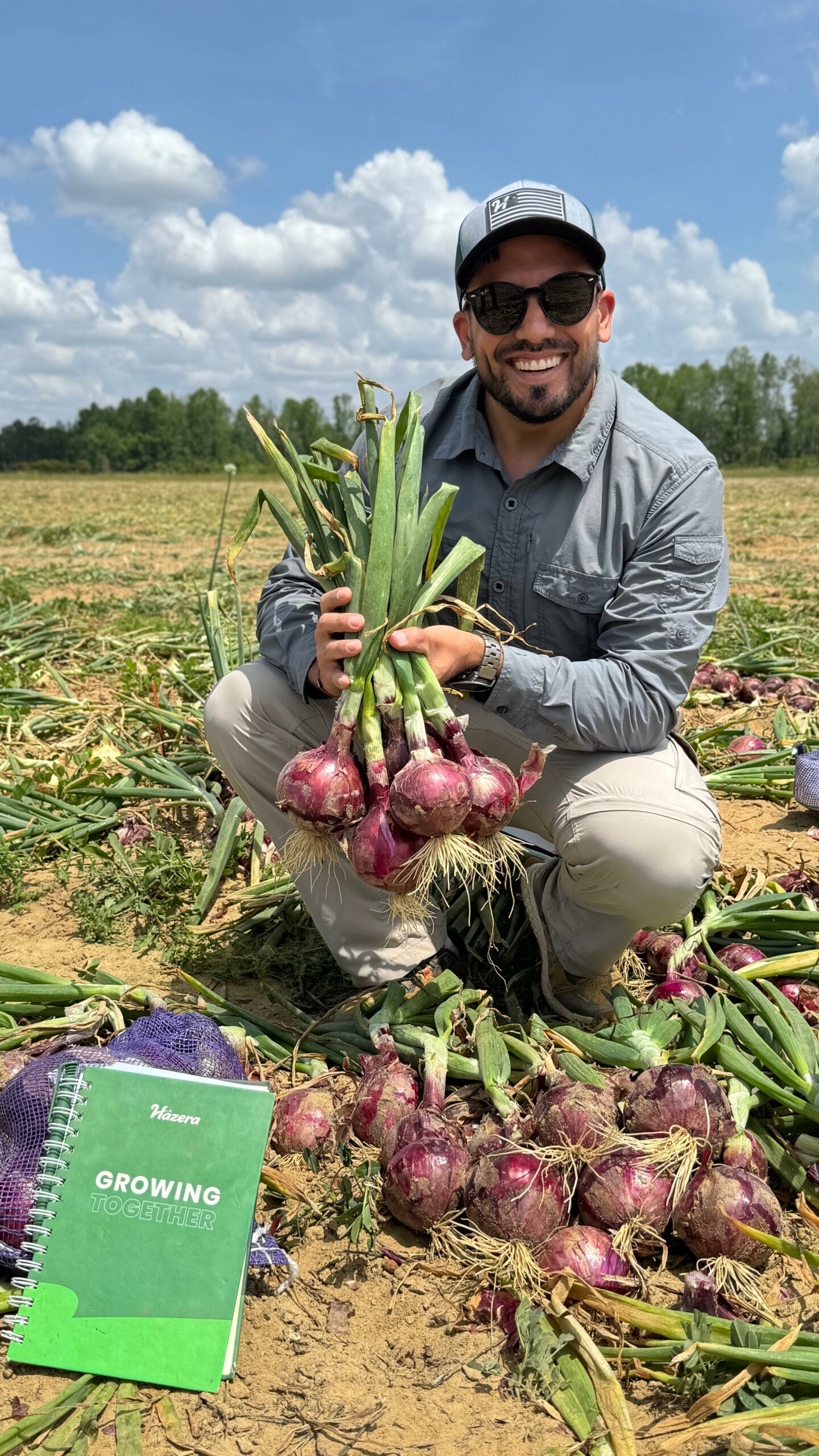
At Hazera, we are proud of our dedicated team, which works passionately to provide our growers with the best products. While we tend to put our products in the headlines, it is the Hazera team who are behind our success. Let’s shine the spotlight on Ignacio Lopez, Sales Manager for Latin America.
Ignacio Lopez grew up in Chilecito, a small town in Argentina, where agriculture was part of his everyday life. His roots in farming go back to childhood, helping his father in a water drilling company. “I could see the farmers’ work and how they started growing a little plant that then ended up being the food of somebody. I really loved that,” he recalls.
After studying Agronomic Engineering and completing an MBA, Ignacio joined Hazera. “I thought: if I know the technical part, it’ll be easier for me to go deeper on the business side,” he explains. Based in Buenos Aires, he has led Hazera’s commercial activities in South America and the Caribbean for over three years. Since January 2026, he has taken on a new role as Sales Manager for Latin America, now also overseeing Central America, including Guatemala, Costa Rica, Honduras and Panama. “It allows me to explore an unfamiliar market, understand its dynamics, and deliver the results we need,” he says. “My goal is to elevate our Latin America region to a higher level of market positioning.”
Outside work, family comes first. Ignacio is the proud father of a one-year-old daughter, whom he calls his Princess. He enjoys travelling with his partner, discovering new food, and sports. “I’m a BBQ enthusiast and a sports lover. I enjoy running, which I can do when I’m travelling,” he adds.
If you had to explain your job to a 5-year-old, how would you do it?
Ignacio smiles before answering: “I really love this question because maybe I even have to explain it in a couple of years to my little girl.” His answer is simple and playful: “I help farmers to choose the best seeds. If I’d have to compare it, I would say it’s like picking the right shoes to run fast. If you choose the right shoes, you will run fast, and you could win competitions. Helping farmers choose the right seeds means their vegetables grow strong, tasty and healthy.”
What’s something you’ve learned during your career at Hazera from working with colleagues or partners from different cultures?
“It’s always challenging. But it’s also nice to do and this is something that I’m really passionate about,” Ignacio says. His biggest lesson? “Listen first and then adapt.” Latin America is wonderfully diverse with different communication styles and decision-making approaches. “All that can change from one valley to another,” Ignacio explains. Sometimes that means a detailed presentation, other times hands-on in the field, or even a quick WhatsApp voice note. For Ignacio, building trust and respecting local expertise is key: “And celebrate wins together, whenever you can.”
What’s the most unusual or memorable thing that’s ever happened to you in your career?
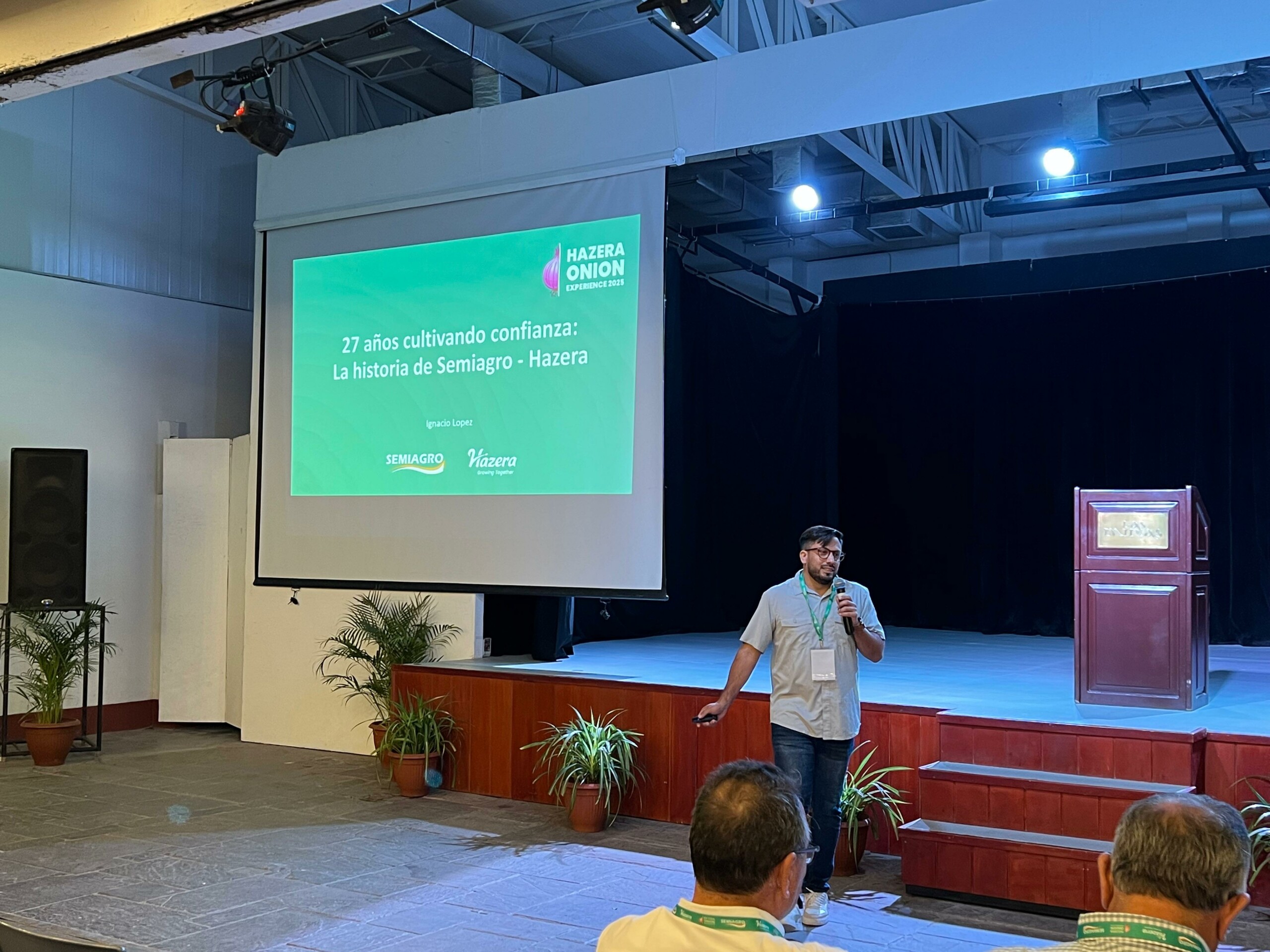
Ignacio doesn’t hesitate: “We did an event in the last week of October in Peru which we called the Hazera Onion Experience,” Ignacio recalls. The three-day event brought together growers, dealers, buyers and technical experts from across the globe. “Seeing every actor in one place meeting, sharing insights, building new connections… I realised we are on the right track. Collaboration accelerates and multiplies for sure.” The event took over a year to plan and involved 150 participants. “I didn’t do it by myself; I just had a great team that did it. Now we are analysing how to shape this concept for the future – maybe biannually or with other crops like tomatoes.”
One of the reasons Ignacio feels at home at Hazera is the company culture. “When you have an entrepreneurial mindset, Hazera is the right place. You don’t hit walls here, you find bridges instead. That makes it easier to innovate and create impact,” he says.
If you could look ahead 10 years, what change in your job field would excite you most?
“Climate-change is going to be a real challenge in a couple of years. We’re already seeing that now with dry seasons and heat,” Ignacio explains. He also sees technology playing a bigger role: “We have to pair that with digital tools for farmers to predict planting windows, disease pressure, labour needs and even market timing.” AI-supported demand forecasting and data-driven practices will help reduce risk, waste, and cost while improving yield, flavour and shelf life. Helping farmers adapt step by step is something Ignacio enjoys: “I like to show where you can be and why it should be done.”
Which colleague would you like us to interview next?
“I was thinking about Santiago Oliva. He’s the Portfolio Marketing Director of Cucurbits and Peppers,” Ignacio suggests. “He’s really young for the position and has worked in different countries and sectors. It would be interesting to see how he did it.”
Do you want to stay connected with our Hazera people?
Follow us on our social media channels to stay connected with our Hazera people! If you have any questions left, don’t hesitate to ask them via our contact page!
Meet the People Behind the Crops – Heritage Edition: Arthur Zuidweg
Posted on Oct 07, 2025
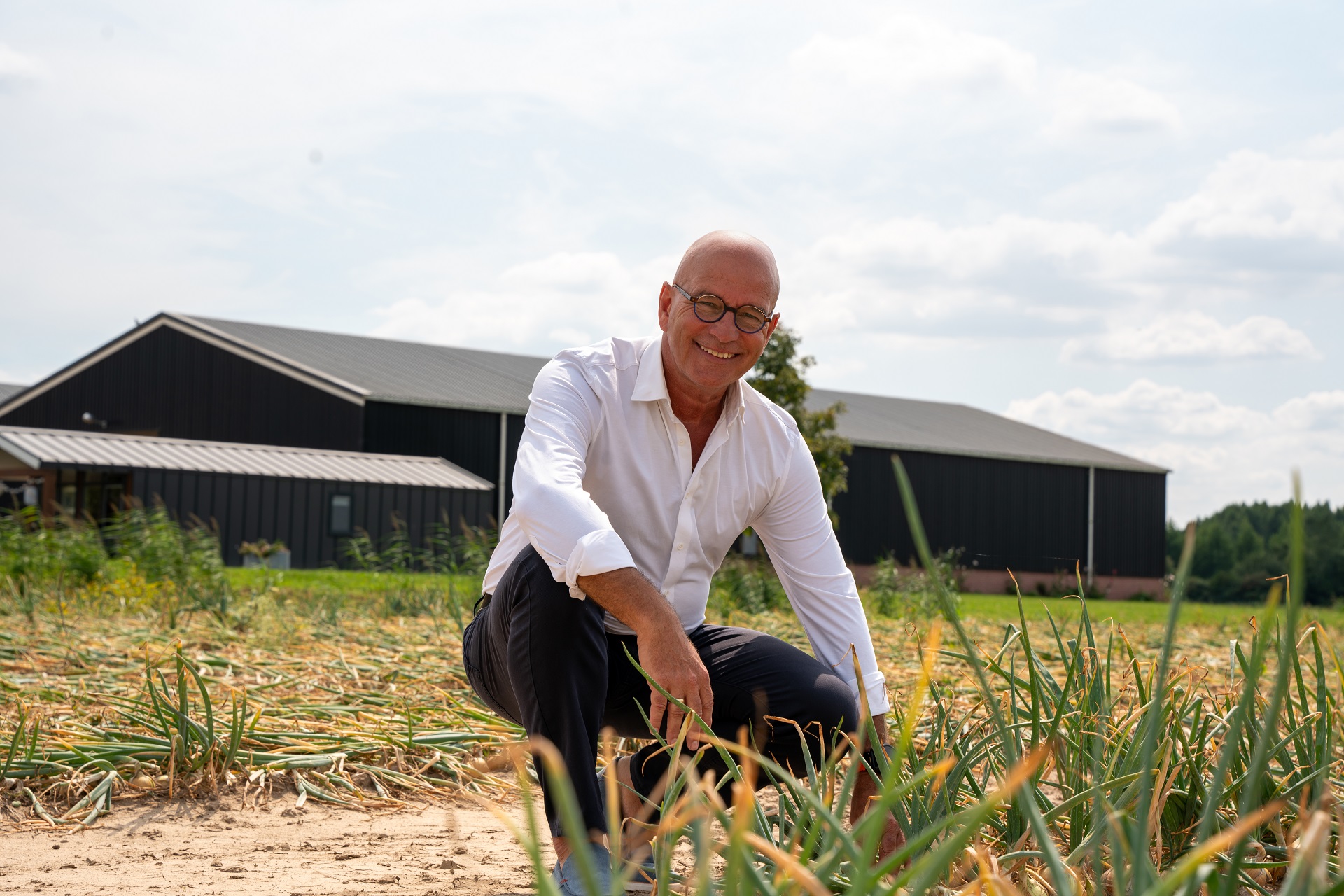
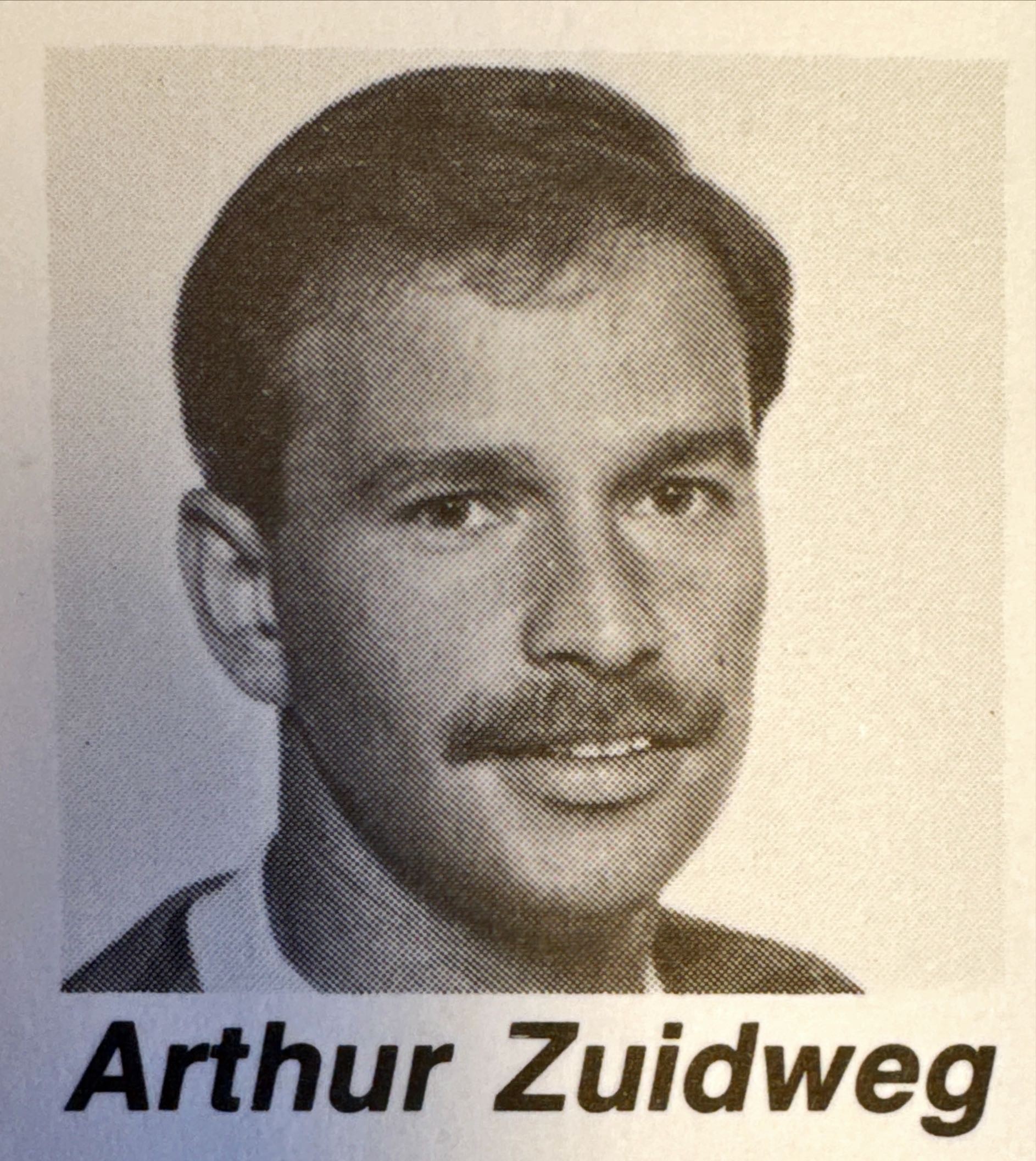
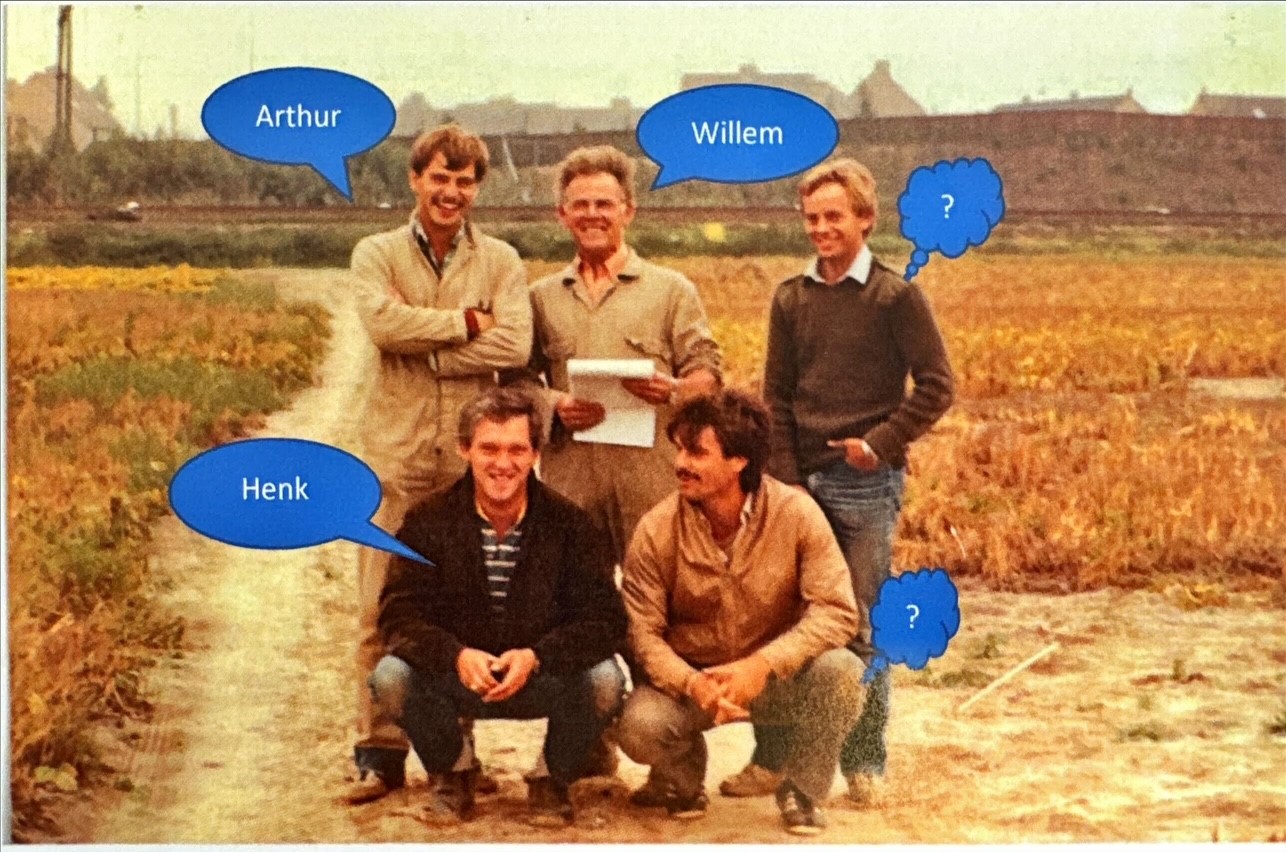
At Hazera, we value the people who have helped shape our company over the years. In this Heritage Edition, we reconnect with colleagues who have either moved on from Hazera or have been part of our team for many years. Today, we speak with Arthur Zuidweg, Supply Chain Planning Expert. For more than 40 years, Arthur has been an integral part of Hazera’s story.
Arthur began as an assistant bean breeder, coming from a background in garden architecture. Introduced to the seed business by his father-in-law, this step proved life-changing — bringing him not only a lifelong career but also a lifelong marriage. Arthur’s current role is Planning expert within the Supply Chain department.
From beans to supply chain, Arthur has seen it all. “Back in the day, we even did the quality checks ourselves. NAKTuinbouw trained me for this,” he recalls. Beyond work, Arthur treasures his family, with whom he shares many proud memories and joys, including his grandchildren.
What is a common myth about your job or field of expertise?
“There’s a common myth that Supply Chain ‘knows’ everything or can fix every problem. In reality, while we do play a central role — acting as the spider in the web between production, processing, demand planning, and sales — our real strength lies in connecting the dots.” Arthur explains that it’s Supply Chain’s responsibility to bring the right people and processes together. “But it’s important to stress that solving every issue requires collaboration across the organization. It’s never a one-team effort.”
In your opinion, what is the most important personality trait someone should have to work in your industry?
“In Supply Chain, you need to work well under pressure and show resilience. It’s about maintaining a helicopter view while staying calm and collected — especially during the high season, when stress levels can be intense,” explains Arthur.
Tell us about a project you’re proud of and why?
“I’ve been a Supply Chain Manager and Team Lead for more than 12.5 years. Beyond the business responsibilities, I truly enjoyed leading a team — it was a rewarding experience, and I’m proud of the team I had the opportunity to build. The personal connections mean a great deal to me.”
Arthur also benefited from the support of his wife, who managed a large team herself. “Exchanging experiences and learning from each other was inspiring, and she often offered me an invaluable ‘outside-in’ perspective.”
What does “Hazera – Growing Together” mean to you?
“Literally growing together. With a sense of unity and solidarity, we do this as a team — taking care of each other, listening to one another, and showing respect, even in our differences.” Arthur is convinced that that’s very important nowadays.
Tell us something interesting/funny about you most people don’t know.
“In my spare time, I enjoy woodworking with my son. Together, we design and create wooden tables with epoxy. Woodcraft is my hobby, and it’s even more special because I get to share it with him.”
What lessons have you learned in 40 years that you would pass on to younger colleagues?
“Over the years, I’ve witnessed the company’s growth, marked by rising sales and an expanding crop portfolio,” Arthur says. “But beyond the business achievements, the most valuable lesson I’ve learned in four decades is the importance of truly listening. When we listen to each other, we gain deeper understanding. And that’s how we find the best solutions together.”
What do you hope the company will achieve in the years ahead? Arthur doesn’t beat around the bush: “We strive to be the market leader in onions.”
If we opened a time capsule from your first year here, what would we find inside?
“A forklift would be in the time capsule because it symbolises those early years of hard, hands-on work. And,” Arthur continues, “it reflects the practical side of my role, the dedication to keeping everything moving, and the way we all helped lay the foundation for what the company has become today. It’s more than just a machine, it represents reliability, effort, and the essential contribution we made from day one.”
Do you want to stay connected with our Hazera people?
Follow us on our social media channels to stay connected with our Hazera people! If you have any questions left, don’t hesitate to ask them via our contact page!
Meet the People Behind the Crops – Heritage Edition: Wim van der Heijden
Posted on Sep 04, 2025
At Hazera, we value the people who have helped shape our company over the years. In this Heritage Edition, we’re reconnecting with colleagues who may have left the workplace, but whose contributions are still part of our story. Today, we speak with Wim van der Heijden, retired breeder and product development specialist from Kaatsheuvel (NL). Wim played a key role in the development of important crops and helped build the foundation that still supports our work today, a great example of what it means to grow together.
Wim, father of two daughters and grandfather of four grandchildren, worked at Hazera for nearly 40 years before retiring in 2019. After studying at the Higher Agricultural College, he started in 1981 as an assistant breeder in Stompwijk. There, he worked on bush beans, parsley, and other legumes. After about five years, he was transferred to the Tuitjenhorn location, where he spent another five years working as a breeder for radish, and later also for red beet and carrots.
“You can hardly imagine it now,” Wim says, “but back then there was no marketing department. Breeding and sales worked together, which sometimes led to large stocks of seeds that couldn’t be sold.” To improve this, a marketing department was set up. Wim became part of this team as Product Development Specialist for the root and bulb crops, which at that time included nearly all vegetable crops Hazera was active in.
Around 2000, Wim became Product Manager for onions, radish, leek, and red beet, and served as backup for carrots. Until his retirement, Wim remained active as Product Manager. In the last eight years, his focus was mainly on onions and radish. He led colleagues in various countries and worked on defining and developing the traits varieties needed to have.
What is a common myth in your field of expertise? Wim laughs as he recalls a story that used to circulate: “A colleague once said courgette seeds germinate better if you put them under your pillow at night and sow them the next day. Whether it’s true? No idea, but it was a funny theory!”
In your opinion, what is the most important strength someone needs to be successful in your job? Wim doesn’t have to think long. Good collaboration with colleagues and perseverance are, in his view, essential. “With onions, for example, a biennial crop, it takes about six years to go from A to B. It requires a lot of patience and endurance.” He also believes you shouldn’t be too theoretical. “I need to hold a product in my hands to judge whether it has potential. You can’t be afraid to get your hands and feet dirty,” he jokes.
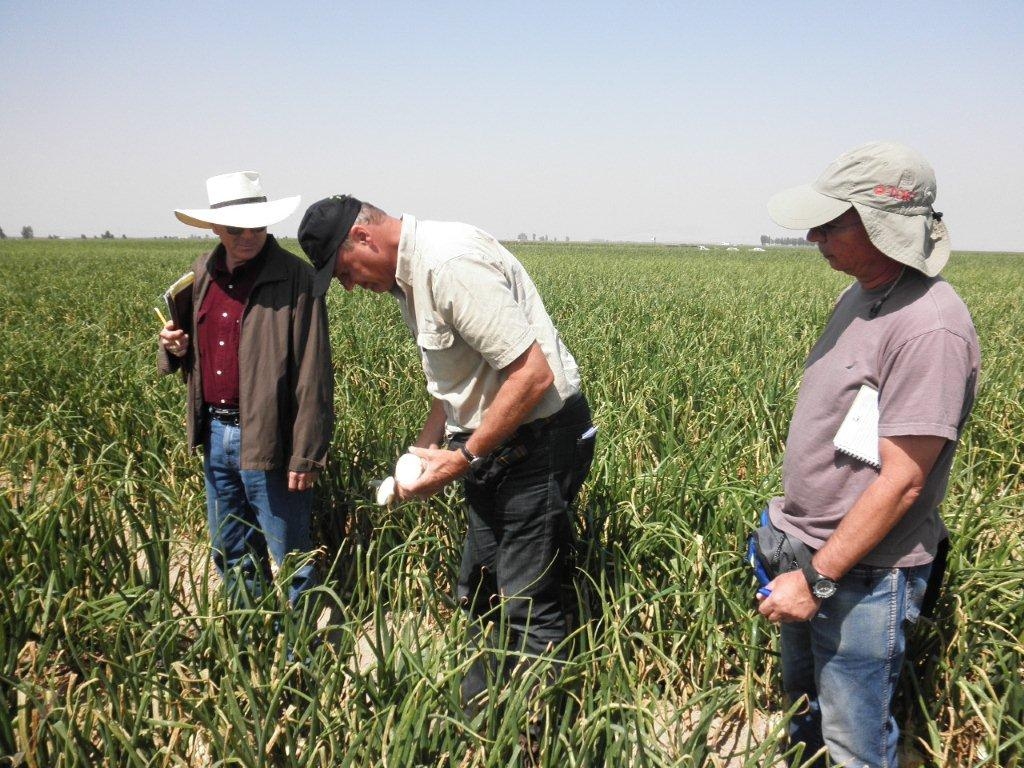
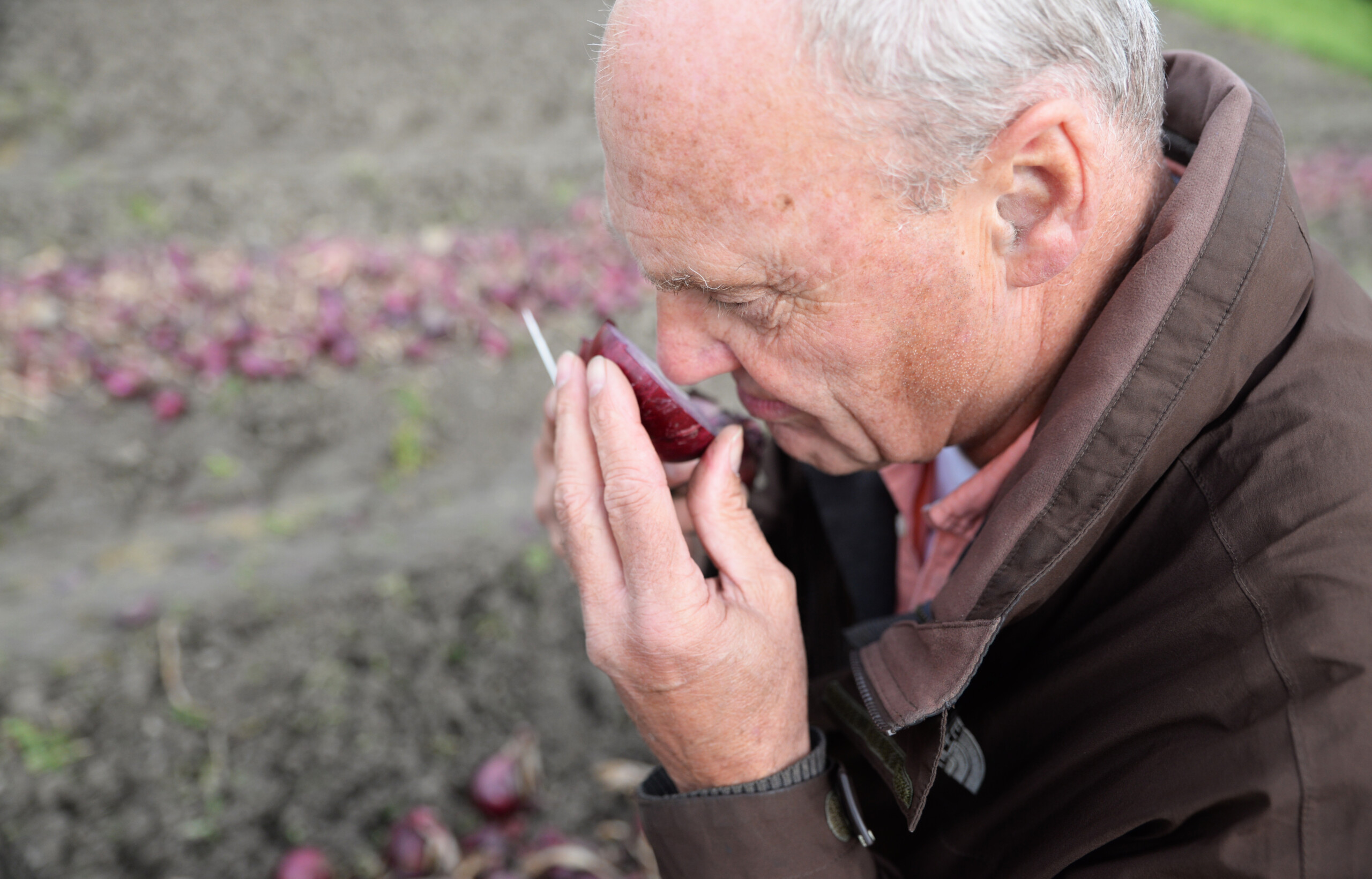
Tell us about a project you’re proud of and why. After a career spanning nearly 40 years, there are of course many projects to look back on. Wim is especially proud of the development of firmness in Hazera onions. He explains that Hazera was one of the first companies to purchase a firmness tester. “Every onion from every line was manually pressed to determine firmness and select the best. That project took about 15 years, but we really hit the mark with it. The Centro and Dormo varieties resulted from it.” Hazera still offers these varieties. And according to Wim, that’s likely to continue due to their unique characteristics. “Also worth mentioning,” Wim adds, “is that Hazera was one of the first to develop downy mildew resistance in onions. That was quite a breakthrough in onion breeding.” Wim has plenty more to say about onions. He enthusiastically talks about Hazera’s growth: “In the Benelux, we started with a 2 to 3% market share in onions. Thanks to the right varieties in terms of yield, firmness, sprouting tolerance and storability, we grew to almost 30%. We completely turned the market upside down.”
What does “Hazera – Growing Together” mean to you?
During the interview, Wim repeatedly emphasizes how Hazera grows as a team.
“Of course you’re never alone. We do everything together with the breeding team, the sales team, etc. We started with a 2 to 3% market share in onions. That’s nothing, right? Farmers didn’t even know us. And to turn that into almost 30%, we achieved that together.” Wim is also proud of what Hazera achieved in radish by working with the same breeders. “Stability is very important, and that’s how you achieve the best results. I had the great privilege of choosing my own people. That’s a big plus, because you always choose people who suit you and have the right background. They were truly committed. That kind of motivation really makes a difference.”Tell us something about yourself that most people do not know.
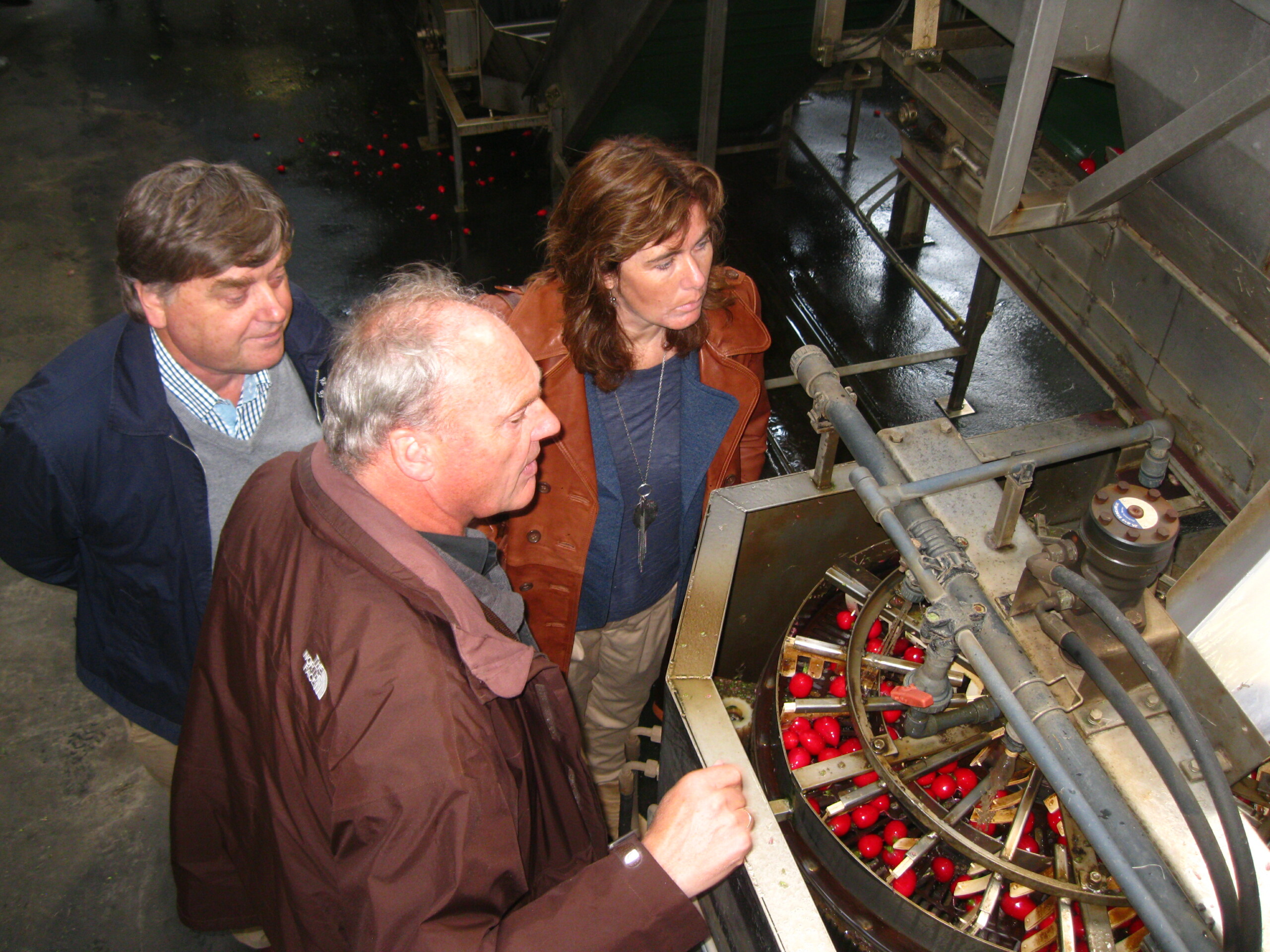
“What most of my former colleagues probably don’t know,” Wim explains, “is that I always wanted to be a farmer. That never really came up at work.” Since he didn’t come from a farming background, he worked on a farm during school to gain hands-on experience. Wim continues: “That’s where I learned the tricks of the trade. Looking back, it really laid the foundation for my role as a breeder.” Things could’ve turned out very differently though. Originally, Wim planned to go into livestock. But after a crop farming internship, he changed direction. “Yes, I loved it,” he says with a smile. “And believe it or not: I only wrote one job application, and that was to Hazera!” Except for one short detour, Wim stayed until he retired. A career to be proud of!
Do you want to stay connected with our Hazera people?
Follow us on our social media channels to stay connected with our Hazera people! If you have any questions left, don’t hesitate to ask them via our contact page!
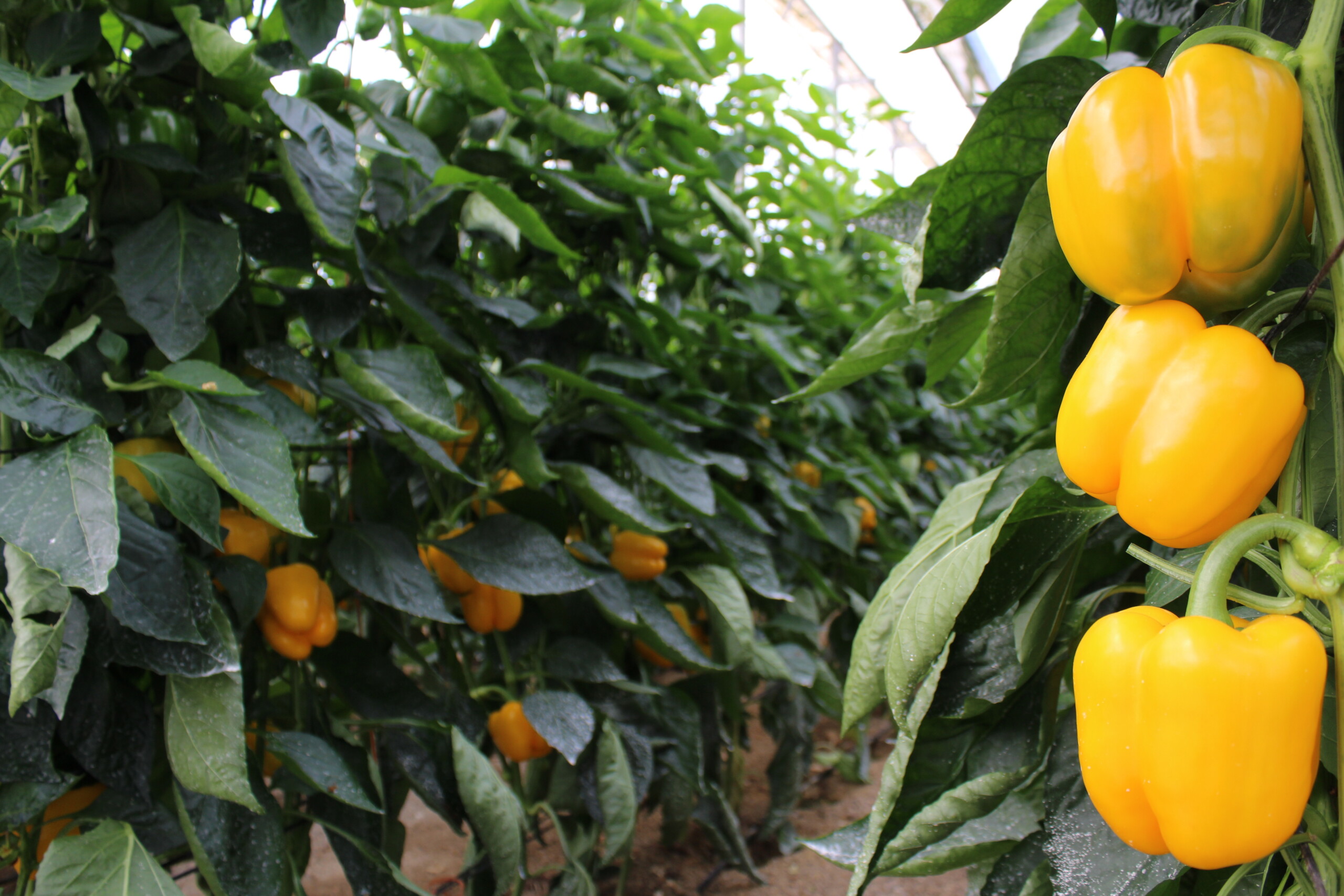
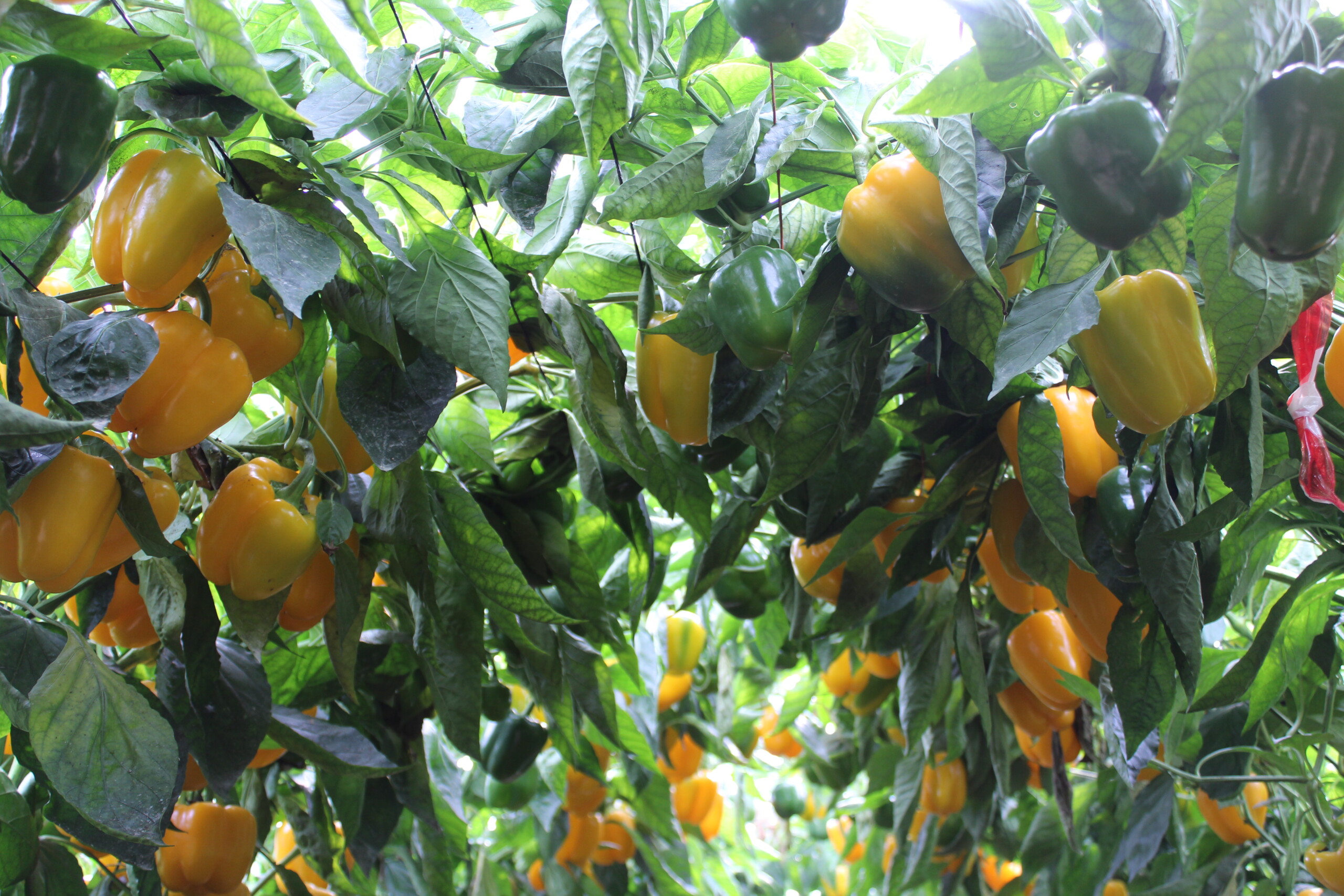
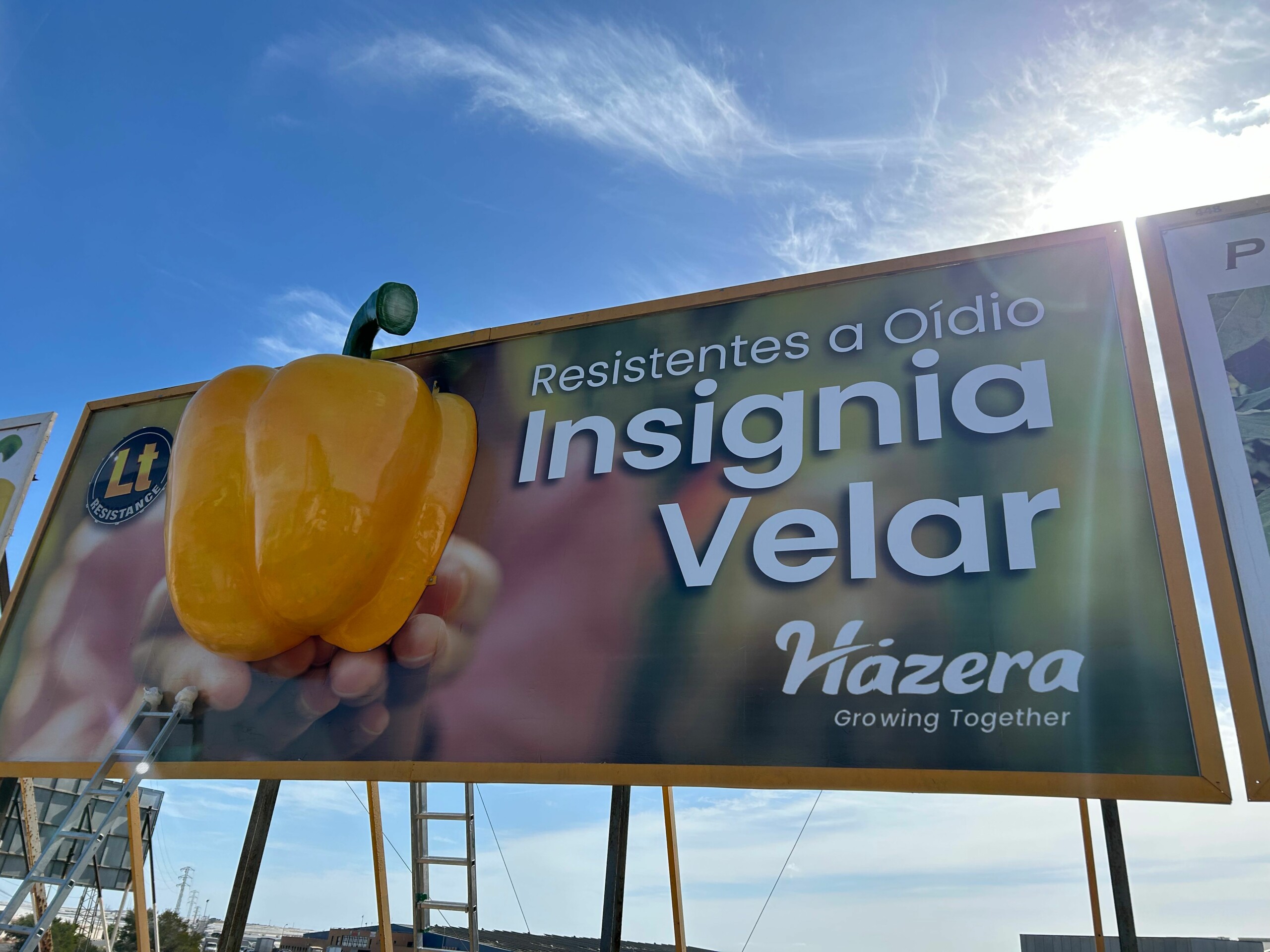
Spanish growers have long sought a pepper that combines vibrant color with an ideal fruit size, especially suited for the popular Flow Pack packaging format demanded by markets like the United Kingdom.
Hazera developed Insignia, a standout yellow blocky pepper, with exactly these needs in mind, bringing a high-quality option that meets market standards and consumer expectations. Insignia was introduced six years ago to the Spanish market and is cultivated specifically for greenhouse environments.
Insignia is more than just an attractive yellow pepper. It has been a game-changer in sustainable farming practices. As one of the first yellow pepper varieties to offer Lt resistance, Insignia allows growers to cultivate under reduced treatment conditions, helping to reduce chemical dependency.
As a global leader in the seed industry, Hazera knows that success starts with trust. Initially, some growers were hesitant to embrace the reduced treatment approach, even with Insignia’s disease resistance. Demonstrating our dedication, we worked side-by-side with growers, sharing expertise and crop management tips to help them overcome their concerns.
Jose Manuel López Vargas, a grower from Almeria who has been cultivating Insignia since its debut, stated: “Insignia is a high-yield variety, giving me confidence year after year. I plan to continue growing it in the years to come.”
Today, Insignia is the leader for early-season production in Spain, with nearly 50% of the market share. Its adaptability has also been proven in successful trials in Poland, reflecting Hazera’s ability to combine global innovation with local expertise. This variety enables growers to achieve high yields and provide fresh, nutritious produce to northern Europe during the winter months—a testament to our belief that the fruits of our labor strengthen people and communities worldwide.
As a testimony to Insignia’s success, when the cooperative MABE in Almeria conducted a thorough evaluation of the variety, their quality control manager, Jesús Alvarez, said: “This variety meets all our requirements, enabling us to provide our customers with a Flow Pack program of great quality, featuring vibrant yellow color, size, and consistency.”
Looking ahead, Insignia is expected to maintain its leadership position, backed by Hazera’s ongoing commitment to innovation. New hybrids are in development to reinforce our dedication to offering resilient, high-performance varieties. At Hazera, we remain focused on creating seeds that empower growers, enrich communities, and contribute to a healthier, sustainable future.
Would you like to learn more about Insignia? Don’t hesitate to contact us.
At Hazera, we are proud of our dedicated team, which works passionately to provide our growers with the best products. While we tend to put our products in the headlines, it is the Hazera team who are behind our success. Let’s shine the spotlight on Maria Martinez, Marketing Communications Manager from Almería, Spain.
Maria Martinez is 30 years old and has been with Hazera for almost nine years. She started in finance at Hazera and gradually began combining both finance and marketing communications. “When I started, the Marcom department didn’t exist at all. We only had a Facebook page but we didn’t use Instagram or other platforms,” Maria explains. “So I created the Marcom department. Then we began to professionalise our marketing actions more and more.” While she also handles finance responsibilities—sometimes stepping in for the finance manager during maternity or sick leaves—her passion lies in marketing. “While finance is all about clear numbers and predictability, marketing allows me to think outside the box, be creative, and work on something different every day.”
Maria’s connection to agriculture runs deep through her family. “My family has a greenhouse, and they have been working in agriculture for years. My grandfather also had a open fields where he used to grow all the fruit and vegetables that they ate in the house. I remember when I was a child, I used to go to the open field with my cousins and grandparents in the afternoon to pick up apples, lemons, and potatoes. So, I’ve been in contact with agriculture since I was a child.”
What is a common myth about your field of expertise?
“I think that in these last two years, people have been thinking of Hazera Spain as a company that innovates a lot and is always doing different things,” Maria shares. She recounted how their innovative approach has become their signature:
“Last year we did 3D billboards which we placed along the highway, and one girl saw the billboard, only seeing a flash of the Hazera logo. But she immediately asked me, ‘Is that 3D billboard from Hazera?’ When I said yes, she replied, ‘I knew it had to be from Hazera because it’s something very different, very innovative, and this is something only Hazera does.'”
Maria continues, “People always say we’re the only company doing very different activities. When we go to fairs, everybody likes to visit our stands because they know they’ll see something totally different compared with the rest of the companies. Marketing is very important, because it often is the first glimpse you get from the company.”
In your opinion, what is the most important personality trait someone should have to work in your industry?
Maria emphasises that “the secret of Hazera Spain is the team. When you enter the company, the feeling is that everybody is working, but if someone laughs, another laughs also. We try to have a very good environment.” She stresses the importance of connection in marketing work: “For social media, for different events, you need to have a good connection with people. Because even though we sell products, we’re a company that works for people. It’s very important to have a good positive attitude. Never say this is impossible. Especially in marketing, flexibility is crucial. If you can’t do something today, tomorrow you can.”
Tell us about a project you’re proud of and why.
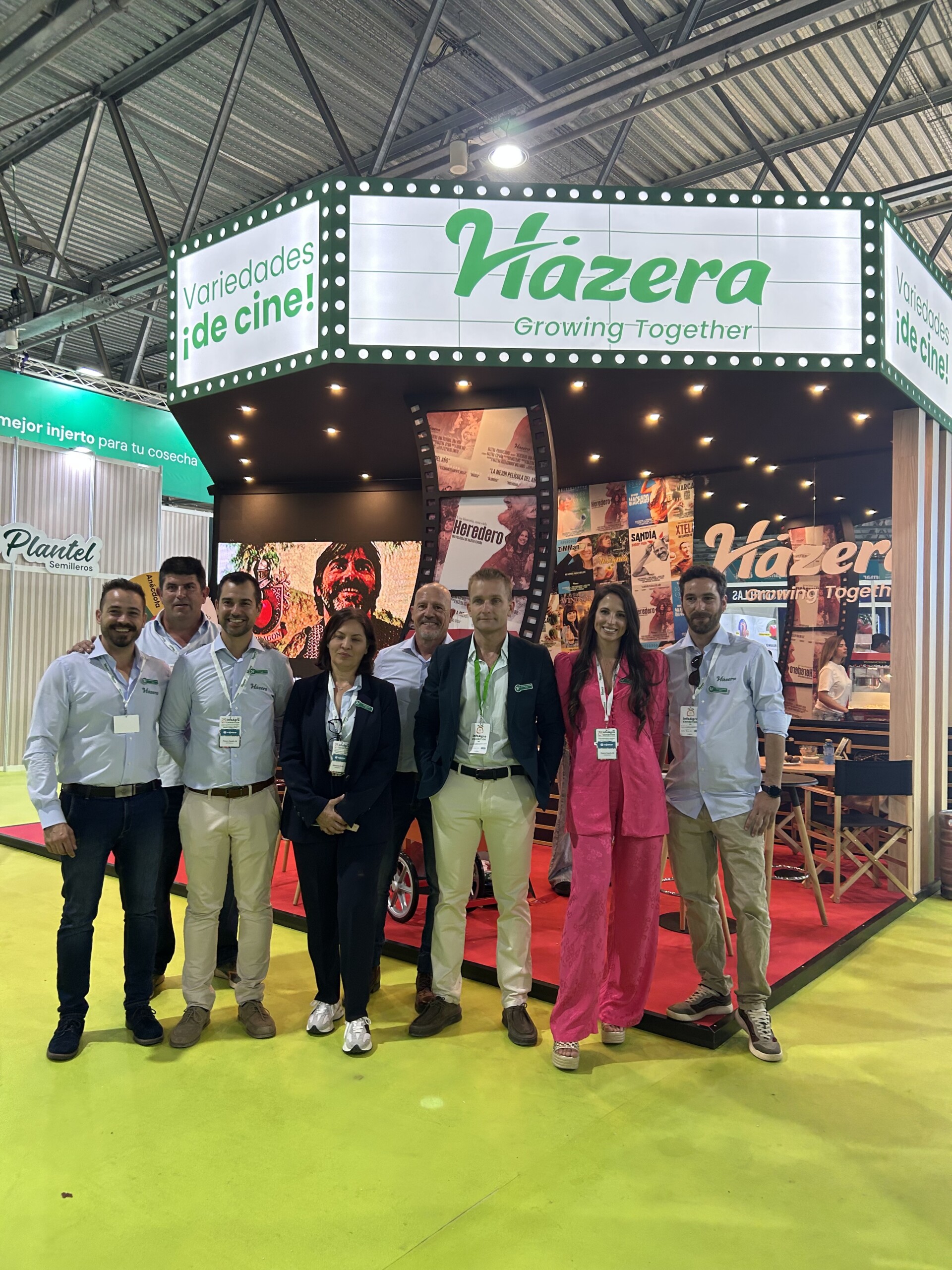
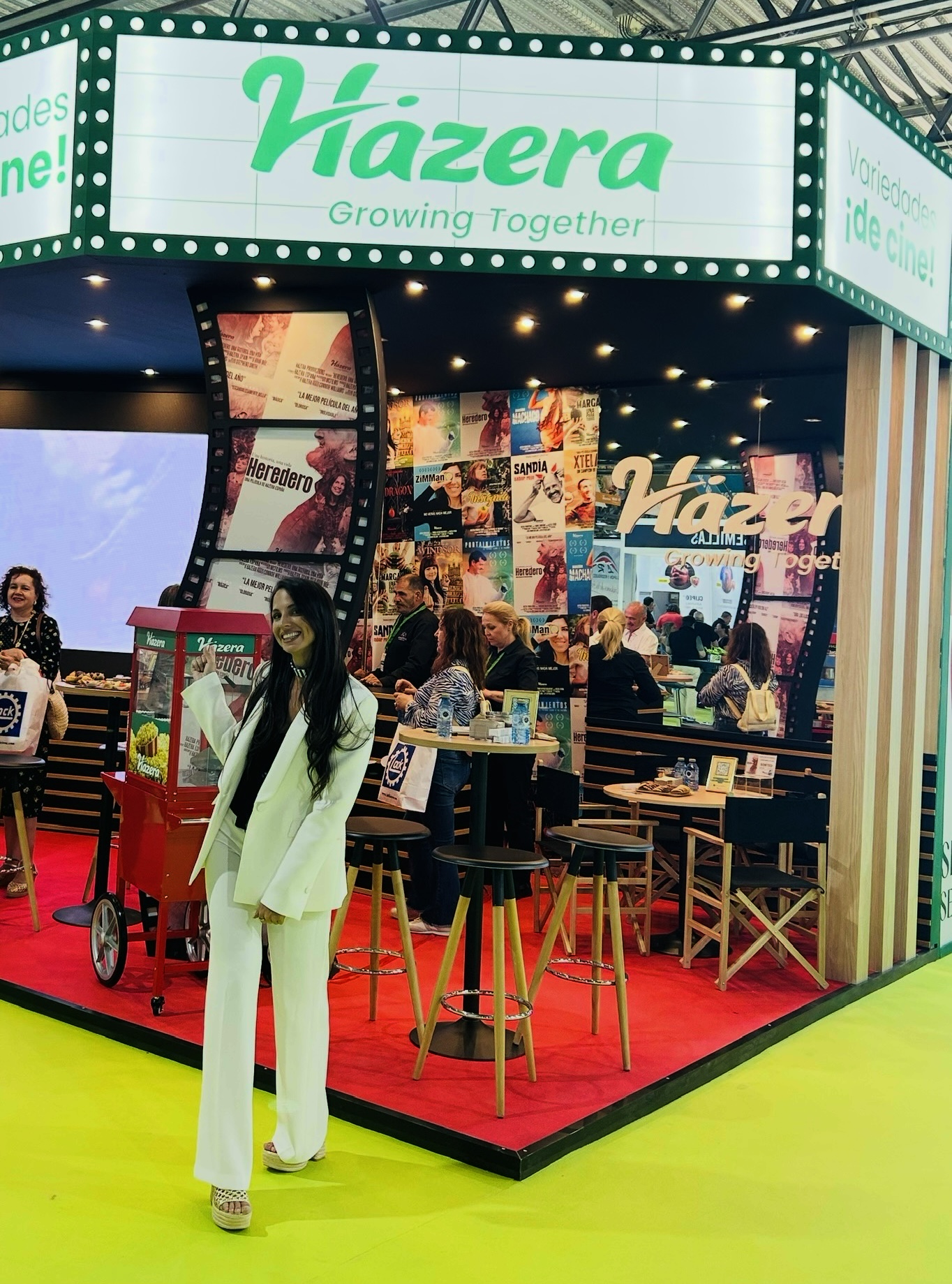
“This year I’m very proud of the cinema campaign, and I am not only proud because of the result, but also because of the process,” Maria says enthusiastically. The ambitious project began when General Manager Manolo mentioned being at the cinema with his daughters and suggested doing something cinema-related. “We thought about this campaign in July of last year. We couldn’t tell anyone anything because if another company did something similar with cinema, the campaign would have been a total disaster.” The comprehensive campaign included a 15-minute film about the Heredero tomato variety, cinema advertisements for other varieties like ZiMMan, Nemeton, Pendragon, and Windsor, billboards designed like movie clapperboards, a Women’s Day cinema team-building event, and a premiere complete with red carpet. Despite challenges, including unexpected rain during filming in typically dry Almería, the campaign was a tremendous success. “This was Heredero’s first commercial year, and we sold all the seeds. Our marketing campaign had a result.”
What does “Hazera- Growing Together” mean to you?
For Maria, Growing Together represents collaboration at every level. “I do a lot of collaborations with influencers, and with other companies. I think the right way to grow is to collaborate because we can learn together. Also, Growing Together is reflected in our commitment to the clients— for example, this year we celebrated family days and invited people to the cinema to see our film. We don’t want to only involve the clients with Hazera, but like to involve their families as well. Because if the family is involved, they’ll have a good vision of Hazera and they are going to talk to other people about Hazera.”
Tell us something about yourself that most people do not know.
“The majority of people, external and sometimes internal, think that I studied marketing because I do everything related with marketing. But the reality is I studied finance and accounting,” Maria reveals with a smile. “Everything I learned was by myself. I did a lot of online courses, learning how to edit videos, how to create good social media planning. When I started in marketing it was like an obsession for me. I started following marketing companies, reading marketing books, and listening to marketing podcasts. While finance taught me precision, it’s marketing that allowed me to think beyond limits and write the story I’ve always wanted to tell.”
Do you want to stay connected with our Hazera people?
Follow us on our social media channels to stay connected with our Hazera people! If you have any questions left, don’t hesitate to ask them via our contact page!
At Hazera, we are proud of our dedicated team, which works passionately to provide our growers with the best products. While we tend to put our products in the headlines, it is the Hazera team who are behind our success. Let’s shine the spotlight on Juan Montes, Product Development Specialist Tomato from Almería, Spain.
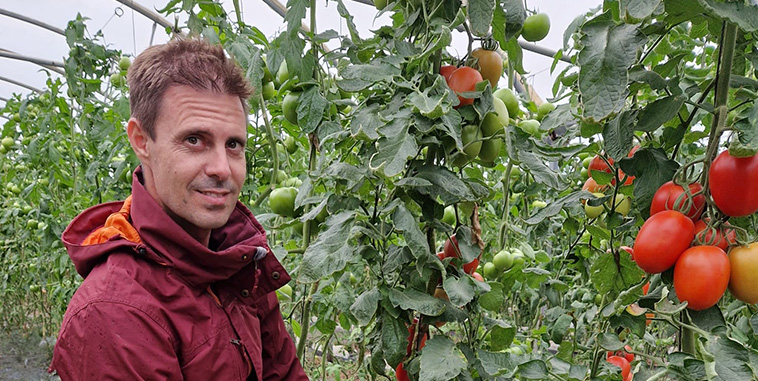
Juan Montes, father of two, was born in a coastal town in Almería, Spain. “Fortunately, I grew up surrounded by beaches and greenhouses, and since my father is a farmer, my connection with the crops was inevitable. So, I studied agricultural engineering at the University of Almería and started working as a crop advisor in 2004. After a little more than two years, I changed sectors and began working as an engineer in the technical department of a public works company. However, my love for crops led me back to technical advising for seven years at a large export company. Finally, I joined Hazera in 2014 as the development manager for tomato cultivation, where I remain to this day.”
What is a common myth about your field of expertise?
“In the agricultural sector, seed companies and the people who work for them are well received because they always bring new developments. However, we are rarely fully trusted, and it is often thought that our goal is only to sell at all costs.” Juan shook his head and said, “but nothing could be further from the truth. It is true that we aim to sell and repeat the sale year after year, but what we really seek is a partner who evolves and works with us, and we strive to build long-term partnerships, where both parties benefit and is built on trust.”
In your opinion, what is the most important strength someone needs to be successful in your job?
Juan said that “listening and understanding are the most essential traits.” He continued saying that “many times, we are eager to explain our materials, varieties, and their advantages, but perhaps we do not fully understand the focus, which leads to frustrations. Properly listening to and understanding the needs of the growers, the supply chain, and the consumers are the keys to success in our business.”
Tell us about a project you’re proud of and why.
“Over my ten years at Hazera, I’ve been part of many projects, but I’m especially proud of my growing involvement in Fresh Chain. This initiative allows me to deepen my knowledge of cultivation and markets while gaining a broader, global perspective on the business. It also gives me the opportunity to collaborate with colleagues from diverse countries and cultures,” Juan shared enthusiastically then he added, “It’s not just exciting—it’s also a significant challenge. A great example is our exceptional Roma tomato, Heredero. I have the privilege of showcasing it to customers in various countries, including Mexico, Morocco, and Spain, where it has been performing well. Heredero embodies everything we strive for: outstanding quality, firmness, ideal shape and size, high production, and most importantly, resistances, especially against ToBRFV.”
What does “Hazera- Growing Together” mean to you?
Juan said that for him Grower Together means “on one hand, growing myself as a professional, thanks to the development opportunities provided by Hazera and the chance to meet incredible people and professionals from other countries, whom I also see evolving. On the other hand, seeing how the growers, who work with us, grow thanks to our varieties and recommendations.”
Tell us something about yourself that most people do not know.
“Although everyone sees a logical progression in my career—being the son of a farmer, growing up surrounded by greenhouses—it’s normal to be linked to this job/sector. But the truth is, for me as a child going to the greenhouse when we misbehaved was a punishment by my father. When I got to university and told him I wanted to be an agricultural engineer, he was perplexed and when I started my studies, I discovered a new world and began to see plants differently. Fortunately.” Smiled Juan.
Do you want to stay connected with our Hazera people?
Follow us on our social media channels to stay connected with our Hazera people! If you have any questions left, don’t hesitate to ask them via our contact page!
Hazera announces varieties with intermediate resistance (IR) to Tomato Brown Rugose Fruit Virus (ToBRFV) in pipeline
Hazera is proud to announce the launch of our ToBRFV intermediate resistant varieties- the optimal balance between protection and performance– providing the grower an effective tool to face the highly infectious virus, infecting tomato plants, fruit and affecting growers worldwide. The Tomato Brown Rugose Fruit Virus poses a constant threat to growers worldwide, significantly reducing yields, affecting the quality of fruit, and systematically infecting other plants, as it is a very transmittable virus that can infect through soil, tools, water, and people’s contact.
Since ToBRFV hit, Hazera’s R&D team has been working tirelessly to find varieties capable of giving an effective level of ToBRFV resistance without compromising the yield and fruit quality we’ve invested years to perfect. Over the course of several years, Hazera researchers and agronomists invested endless resources to find solutions to address our growers’ needs worldwide. Moreover, according to Alejandro Szechtman, Hazera’s Portfolio Marketing Director, “These efforts included in-depth trials in many locations, under different conditions in a global scale, to confirm that we are able to provide the optimal solutions, with the right balance between performance and ToBRFV protection”.
Hazera is proud to announce a wide ToBRFV resistant variety pipeline worldwide, with which we will be able to tailor-make the optimal solution per market requirement, beginning with Italy, Greece, Spain, Mexico, Turkey, Israel etc’.
Hazera, through Limagrain’s upstream research, contributed to a network of internal and external collaborative discovery projects on ToBRFV using different approaches. This resulted in Limagrain being the first company to file a patent on ToBRFV resistance in tomato in 2017. While the first generation of tomato hybrids resistant to ToBRFV is being commercialized, Limagrain discovery programs continue to work intensively to find resistances against potential emergent more aggressive forms of this devastating virus.
“Our R&D efforts haven’t ended, we’re still investing to achieve higher resistance, and expand our portfolio to the benefit of growers worldwide,” said Szechtman.
Hazera is a global leader in the seed industry. Hazera has headquarters in both the Netherlands and Israel. We operate subsidiaries in 11 countries, together with a distribution network serving over 130 markets. Our partners operate in all kinds of climates, and under diverse growing conditions and market requirements. For over a century, our top priority has been walking alongside them, developing an enormous variety of seeds and providing comprehensive support every step of the way. Hazera’s team of experts works directly with growers to evaluate their needs, assist during variety selection and provide guidance and support throughout the crop cycle.
Hazera is part of the Limagrain Group, an international agri-business based in France. Being a farmers’ cooperative, the Limagrain Group understands the needs of its customers and has grown to become the largest seed company in Europe, specialising in vegetables, field crops and cereal products. Limagrain’s vegetable seed division is the second largest company in the industry.
Hazera’s Official Training Video: Tomato Brown Rugose Fruit Virus (ToBRFV)
Posted on Aug 30, 2021
We are happy to present Hazera’s training video and sanitation guide for dealing with the new ToBRFV virus.
The purpose of this video is to assist growers and farmers to gain a better understanding of the ToBRFV virus, and to share some practical advice and active measures for eradicating the growth of this virus through the use of stringent hygiene and highly effective sanitation. (more…)







 Tell us about a project you’re proud of and why.
 Tell us something about yourself that most people do not know.